
 By
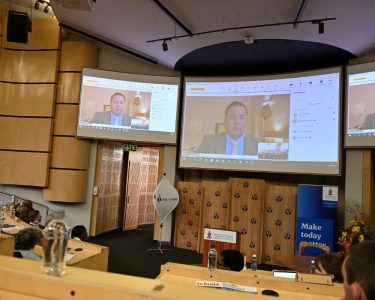
By PRETORIA — The economic and structural viability of timber construction will take centre stage tomorrow as industry stakeholders, policymakers, and academics converge at the University of Pretoria’s Future Africa Campus for the 2026 Timber Construction Conference.

Hosted in partnership with the Department of Trade, Industry and Competition (the dtic) and the Pretoria Institute for Architecture, the event—themed Connected by Timber: From Forests to Future Cities—arrives at a critical juncture for South Africa’s manufacturing, forestry, and housing sectors.
Deputy Minister of Trade, Industry and Competition Mr. John Steenhuisen is scheduled to deliver the opening address, unveiling the dtic’s comprehensive, multi-stakeholder strategy designed to accelerate the mainstream adoption of wood as a primary building material.
For an economy seeking sustainable avenues for industrial growth, the pivot toward mass timber construction offers a compelling multiplier effect across the value chain.
Economic Catalysts and Industrial Diversification
At its core, the dtic’s strategy targets structural inefficiencies in traditional construction while breathing new life into the domestic forestry and sawmilling sectors. By creating alternative, high-value revenue streams for local growers and processors, the initiative directly addresses long-term sustainability and job creation within rural and forestry-dependent economies.
From a macroeconomic perspective, timber construction introduces significant cost-efficiencies and compressed project timelines through the utilization of modular and prefabricated components.
In a developing market grappling with persistent infrastructure bottlenecks and a severe backlog in affordable housing, faster build cycles translate directly to reduced capital expenditure and quicker social returns on investment.
Furthermore, the green building transition aligns with national environmental commitments. Wood acts as a natural carbon sink, offering a substantially lower carbon footprint compared to energy-intensive masonry and steel alternatives.
Beyond carbon metrics, engineered timber products deliver superior thermal and acoustic insulation properties, addressing long-term operational energy efficiencies in residential and commercial real estate.
Research, Innovation, and Higher Education Integration
The commercial drive toward timber is heavily underpinned by rigorous academic research. The dtic has actively partnered with leading tertiary institutions, notably Stellenbosch University and Nelson Mandela University, to quantify and validate the environmental and structural performance of South African timber products. Research coming out of Stellenbosch University, in particular, highlights how locally sourced timber can drastically mitigate the lifecycle environmental impacts of modern buildings.
The conference proceedings were preceded by a dedicated Timber Construction Colloquium focusing on cutting-edge research, capped by an immersive technical site visit to the state-of-the-art Engineering 4.0 Timber Laboratory at the Future Africa Campus.
As industry leaders dissect these technical findings, the focus shifts to translating laboratory innovation into commercial building codes and scalable market practices.
As deliberations continue in Pretoria, the message from policymakers and industry veterans is unequivocal: scaling timber construction is no longer merely an environmental niche, but a vital economic strategy to build smarter, house communities faster, and secure a resilient industrial future for South Africa.