
 By
By A bitter political dispute has erupted in Gauteng over the management and security of government housing developments, following disclosures that nearly one-third of the province’s active housing projects have fallen victim to unlawful occupations over the past five years.

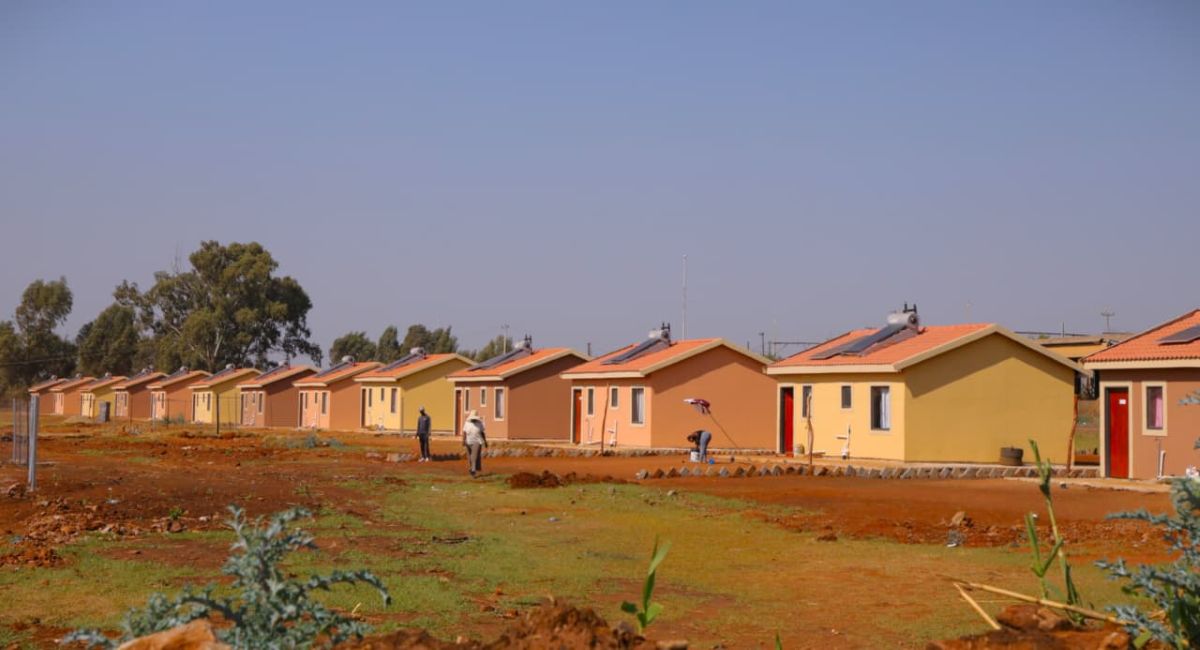
According to official figures disclosed in the Gauteng Provincial Legislature, 14 of the province’s 45 human settlement developments—approximately 31%—are currently impacted by illegal occupations. Affected locations include major developments such as Eagle Nest, Western Mega Project, Danville, Beverly Hills, and Olievenhoutbosch Extension 36.
The figures have sparked a heated debate between opposition lawmakers and provincial officials over state capability, budget efficiency, and the role of criminal syndicates in interrupting social housing delivery in South Africa’s economic heartland.
Opposition Cites Governance and Security Failures
Democratic Alliance (DA) Gauteng Shadow MEC for Human Settlements, Mervyn Cirota MPL, released a statement criticizing the Gauteng Department of Human Settlements (GDHS) for allowing public assets to be compromised. Cirota argued that the extent of the invasions demonstrates an inability to safeguard infrastructure funded by taxpayers and intended for low-income beneficiaries waiting on the provincial database.
“Fourteen out of 45 housing projects in Gauteng… have been illegally occupied in the last five years,” Cirota stated, describing the situation as a failure to protect housing developments and ensure their completion and timely allocation.
The DA pointed to the financial burden of reactive legal interventions, citing department disclosures that obtaining and executing an eviction order costs an average of R1.5 million. Cirota emphasized that spending substantial public funds on post-invasion legal proceedings diverts critical resources away from actual housing construction.
To address these vulnerabilities, the opposition proposed implementing proactive measures, including:
- Enhanced site monitoring and security protocols.
- Early-warning surveillance mechanisms to detect land invasions before structures are occupied.
- Closer operational coordination with local municipalities and law enforcement agencies to enforce swift legal actions.
The party announced plans to submit further parliamentary questions to Gauteng Human Settlements MEC Tasneem Motara regarding the specific conditions that enabled the occupations, the exact number of impacted beneficiaries, and the cumulative property values involved.
Department Defends Record and Points to Criminal Syndicates
Responding to the opposition’s claims, the Gauteng Department of Human Settlements rejected characterizations of state incompetence, arguing that unlawful occupations stem from organized criminal acts rather than administrative failures.
In a media statement released by Chief Director of Communication Services Tahir Sema, the department stressed that the housing developments in question were fully funded and constructed for verified beneficiaries before being targeted by land-invasion syndicates.
“Illegal occupation is a crime, not a delivery failure,” the department maintained. Authorities noted that criminal entities frequently target completed housing units to illegally rent or sell them to desperate residents for profit.
Gauteng MEC for Human Settlements, Tasneem Motara, defended the department’s transparency, highlighting that the figures quoted by the opposition were voluntarily provided in written responses to the legislature.
“Every unit that is unlawfully occupied is a home denied to a family that followed the rules and is waiting its turn,” Motara stated. “We disclosed these figures because we are confronting the problem in the open, and we are recovering these homes for the beneficiaries they were built for.”
Legal Actions and Delivery Targets
The GDHS outlined its current strategies to secure housing infrastructure and clear hijacked developments:
- Security Panels: A dedicated panel of private security firms has been contracted to conduct surveillance, provide early detection, and assist in executing court-ordered evictions.
- Housing Recovery Drive: A provincial initiative was launched earlier this year to reclaim unlawfully occupied units, perform structural audits and refurbishments, and reallocate the units to eligible individuals from the housing demand database.
- Active Evictions: State agencies, supported by the Sheriff of the Court, the South African Police Service (SAPS), and Public Order Policing, are currently executing legal eviction orders under the Prevention of Illegal Eviction from and Unlawful Occupation of Land Act (PIE Act). At the Obed “Mthombeni” Nkosi project in Sedibeng, enforcement operations are addressing unauthorized occupations that expanded from 48 to 292 units.
The department also defended its overall delivery performance for the 2024/25 financial period, noting that it exceeded several key targets:
- Delivered 7,237 Breaking New Ground (BNG) housing units against a planned target of 5,914.
- Serviced 474 sites against an annual target of 233.
- Registered 6,244 property title deeds.
- Advanced 31 mega projects across the province, 18 of which are under active construction, including the Riverside View Mega City development designed to yield over 10,000 housing opportunities.
Public Advisory
Addressing the ongoing demand for shelter, provincial housing authorities issued an explicit warning to residents against participating in unauthorized transactions involving state property. Citizens were urged not to pay money to unverified individuals or syndicates attempting to rent or sell public housing units. Department officials warned that purchasing or occupying unallocated homes results in financial loss, forfeiture of positions on the official housing waiting list, and legal eviction. Members of the public with information regarding organized land invasions have been urged to report these activities to the SAPS or provincial housing offices.