
 By
By PRETORIA — At a time when unilateralism and economic headwinds threaten global stability, the South South geopolitical axis between Africa and Latin America is sharpening its focus.

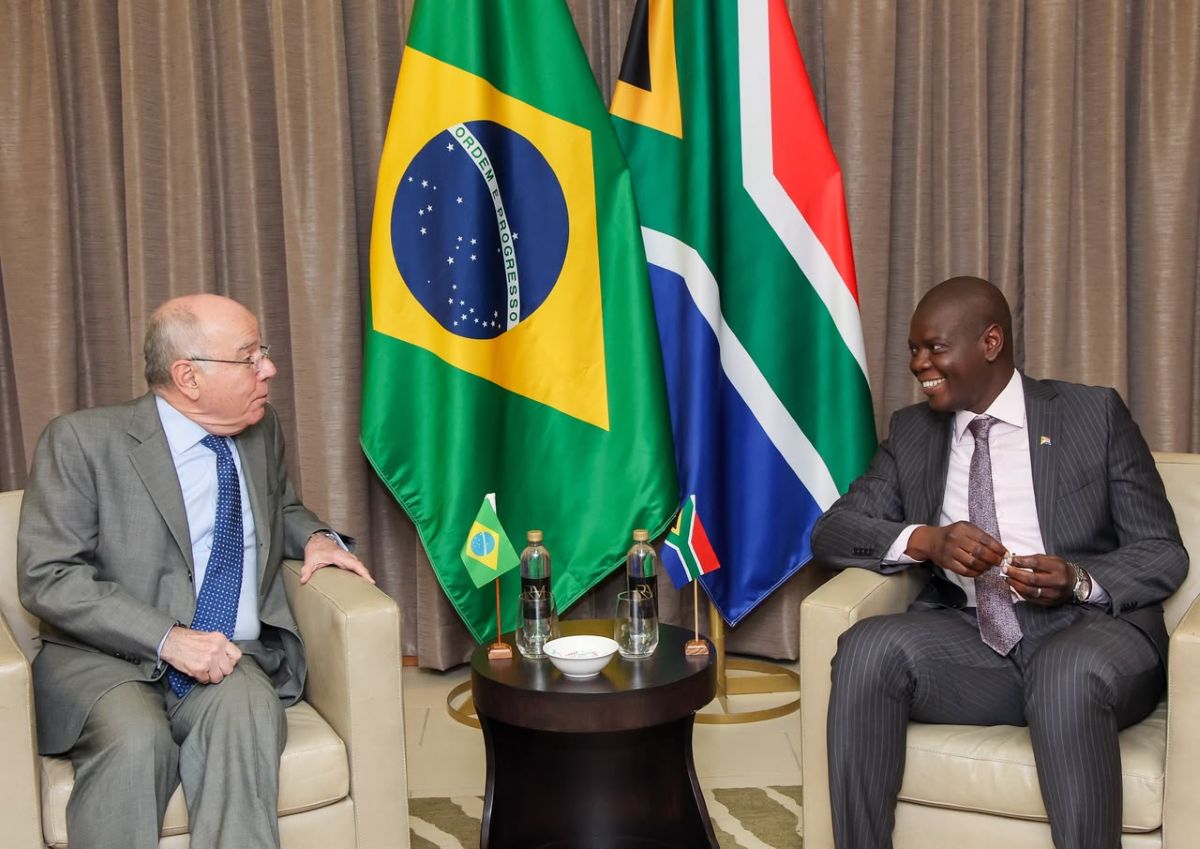
Speaking at the opening of the Eighth Session of the South Africa–Brazil Joint Commission in Pretoria on August 26, 2026, Minister of International Relations and Cooperation Ronald O. Lamola outlined an ambitious roadmap for bilateral trade, green-transition industrialization, and systemic reform of the global financial architecture.
Addressing his counterpart, Brazilian Foreign Minister Mauro Vieira, Lamola framed the bilateral partnership not merely as a matter of historic solidarity, but as a critical strategic alliance between two leading economies of the Global South.
Trade and Investment: Beyond Historical Ties
While South Africa and Brazil share deep historical resonances—marked by shared struggles against racial exclusion, state-building, and strong anti-apartheid ties—the core focus of the Pretoria summit centred firmly on practical economic expansion.
Brazil stands as South Africa’s largest trading partner in Latin America and its second-largest across the entire Americas. In 2025, total bilateral trade between the two countries reached approximately $2 billion. South African footprints in Brazil span pharmaceuticals, technology, mining, financial services, and chemicals, while Brazilian investments have established key holds in South Africa’s automotive and food-manufacturing industries.
To capitalize on this momentum, both governments are finalizing an Agreement on Investment Promotion, Cooperation, Facilitation and Protection designed to derisk further private-sector entry. Utilizing existing platforms like the SACU–MERCOSUR Preferential Trade Agreement, South Africa aims to position itself as a strategic gateway for Brazilian firms into the 1.4-billion-person African Continental Free Trade Area (AfCFTA). Conversely, Brazil offers South African firms direct access into Latin American and Caribbean markets.
| Economic Metric / Focus | Current Status / Details | Strategic Target |
| Bilateral Trade Volume | ~$2 Billion (2025 data) | Expand and diversify trade balance |
| Trade Integration Platforms | SACU–MERCOSUR Preferential Trade Agreement | AfCFTA integration & Latin American gateways |
| Key Sectoral Investments | Automotive, Food Mfg., Mining, Biotech, Fintech | Finalize Investment Promotion Agreement |
| Tourism Sector | ~65,000 Brazilian visitors (9th largest market) | Tourism Action Plan 2026–2029 execution |
Tourism has emerged as a major bright spot in post-pandemic recovery. Supported by a 90-day visa exemption and expanded direct flights between São Paulo and South African hubs, Brazilian visitor numbers neared pre-pandemic highs at almost 65,000 arrivals last year, prompting the implementation of a new Tourism Cooperation Action Plan (2026–2029).
Breaking the Extractive Cycle in Critical Minerals
A key economic priority highlighted during the summit is the impending structural shift in global demand for critical minerals—the raw inputs vital for the green transition.
According to International Energy Agency projections cited by Lamola, global demand for critical minerals is projected to quadruple by 2040. Both Brazil and South Africa hold vast reserves of these essential resources. However, Minister Lamola emphasized that both nations must explicitly reject historical, neo-colonial extraction models where raw materials are exported while value addition, wealth creation, and industrial jobs are retained exclusively in the Global North.
“As this demand grows, Brazil and South Africa have an important opportunity to work together to ensure that it does not reproduce old patterns of extraction… Our countries are well placed to advance a different model—one in which the minerals that power a green future also power industrialisation, skills development, technological exchange and prosperity in our own societies.” — Minister Ronald O. Lamola
Tackling Global Debt & Financial Architecture
Beyond bilateral commerce, the Joint Commission serves as a key venue for coordinating strategy within multilateral institutions, particularly the G20, where South Africa took over the presidency following consecutive Global South presidencies led by Brazil, India, and Indonesia.
Both nations continue to push for urgent structural reform of global financial institutions, highlighting the severe debt crises choking emerging economies:

- In Africa: Roughly 750 million people—over half the continent’s population—reside in nations that currently spend more money servicing foreign debt interest than funding healthcare and education combined.
- In Latin America & the Caribbean: Over 350 million citizens face similar fiscal distress, with national budgets prioritizing external debt repayments over primary public healthcare systems.
In response to these systemic imbalances, South Africa utilized its G20 mandate to establish momentum for an International Panel on Inequality, building directly on initiatives launched during Brazil’s term at the helm.
As global trade policies fracture and protectionist sentiments mount in traditional economic capitals, the Pretoria summit sends a clear message: South-South economic integration is no longer just a political ideal, but a pragmatic economic imperative for modern nation-building.