
 By
By 
Gauteng’s push to restore economic productivity across its freight and transit corridors faces a daily bottleneck: broken, vandalized, and unlit traffic signals. In a move designed to stem compounding economic losses caused by gridlock and infrastructure destruction, the Gauteng Department of Roads and Transport (GDRT) has officially accelerated its provincial traffic signals repair and restoration programme.
Following the formal appointment of specialized contractors last month, the department has begun physical works under an intensive 36-month initiative aimed at fixing, modernizing, and securing critical intersections across the province. However, provincial authorities warn that public co-operation will be pivotal if the intervention is to deliver long-term returns on state expenditure.
The Cost of Congestion: An Economic Imperative
Gauteng functions as South Africa’s commercial engine, relying heavily on smooth logistics networks to link manufacturing hubs, freight corridors, and urban labour markets. Equipment failure at high-density intersections translates directly into supply-chain delays, increased fuel usage, reduced productivity, and heightened logistics expenditure for private firms.
The scale of the network highlights the potential drag on the provincial economy: Gauteng houses over 4 500 signalised intersections, with the GDRT holding direct responsibility for 547 strategic provincial nodes.
Persistent damage from organized cable theft, syndicates targeting copper, illegal connections, vehicular collisions, and systematic vandalism has severely compromised safety and efficiency. The continuous cycle of destruction and emergency repairs has absorbed public funds that could otherwise support transformative capital expenditure.
A Five-Pillar Strategy for Modernization
The newly deployed 36-month programme goes beyond basic maintenance, incorporating modern technology and real-time oversight to protect infrastructure assets against repeated theft. The GDRT has structured its operational response around five core execution pillars:
- Complete Infrastructure Reconstruction: Full installation of brand-new traffic signal units at intersections where existing systems were entirely destroyed or stolen.
- Centralized Network Intelligence: The establishment and operationalization of a Provincial Transport Management Centre (TMC) to monitor, direct, and streamline traffic flow data.
- System Upgrades: Modernizing older signal hardware across major corridors to better withstand heavy load and environmental wear.
- Security & Tech Retrofitting: Equipping operational infrastructure with modern technologies, reinforced casing, and security measures to deter criminal tampering.
- Ongoing Maintenance & Repair: Regularized maintenance schedules to prevent operational decay across the existing state network.
By combining physical repairs with centralized monitoring, the department aims to shrink response times, optimize traffic flow along high-yield logistics routes, and protect newly installed hardware.
Public Stewardship and Fiscal Preservation

Addressing reporters, Gauteng MEC for Roads and Transport Kedibone Diale-Tlabela stressed that state investment alone cannot permanently resolve the crisis without local vigilance. Continuous repair cycles deplete provincial coffers, diverting vital public capital away from wider socio-economic development initiatives.
“Public infrastructure theft and vandalism place an unnecessary financial burden on the provincial coffers through costly repairs and restoration work,” noted MEC Diale-Tlabela. “As the Department undertakes this restoration programme, we are calling on all road users, communities, motorists, bikers, cyclists, pedestrians and runners to stand with us in protecting these critical assets. If you see or witness suspicious activity, theft or vandalism, kindly report it to the authorities for immediate action.”
The MEC emphasized that damaged road infrastructure acts as a drag on everyday citizens and business operations alike, disrupting access to workplaces, educational institutions, and public transport facilities.
Outlook for Gauteng’s Transport Corridors
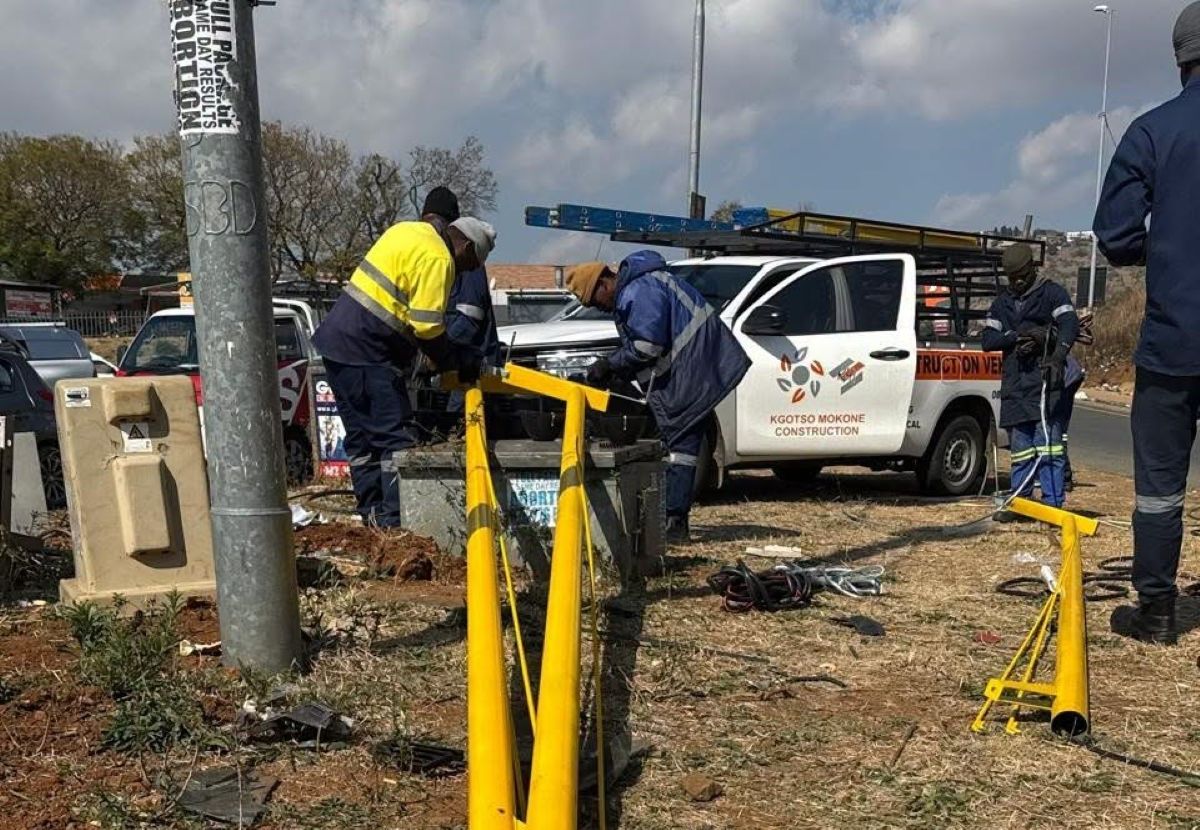
Contractors have already initiated restoration work on identified high-priority intersections, with additional project phases set to target strategic freight corridors and high-density economic zones over the next three years.
To maintain transparency and evaluate project milestones, the GDRT has committed to publishing regular progress updates as deployment moves across the province. For an economy dependent on rapid transit and seamless logistics, restoring reliability to Gauteng’s road signals is a critical step toward broader economic recovery.