
 By
By 
In an economic landscape where youth unemployment remains a critical structural challenge and industrial sectors demand increasingly complex technical capabilities, the line separating classroom instruction from shop-floor application is rapidly blurring.
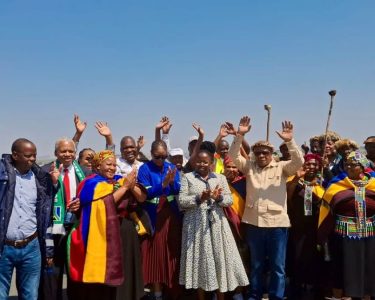
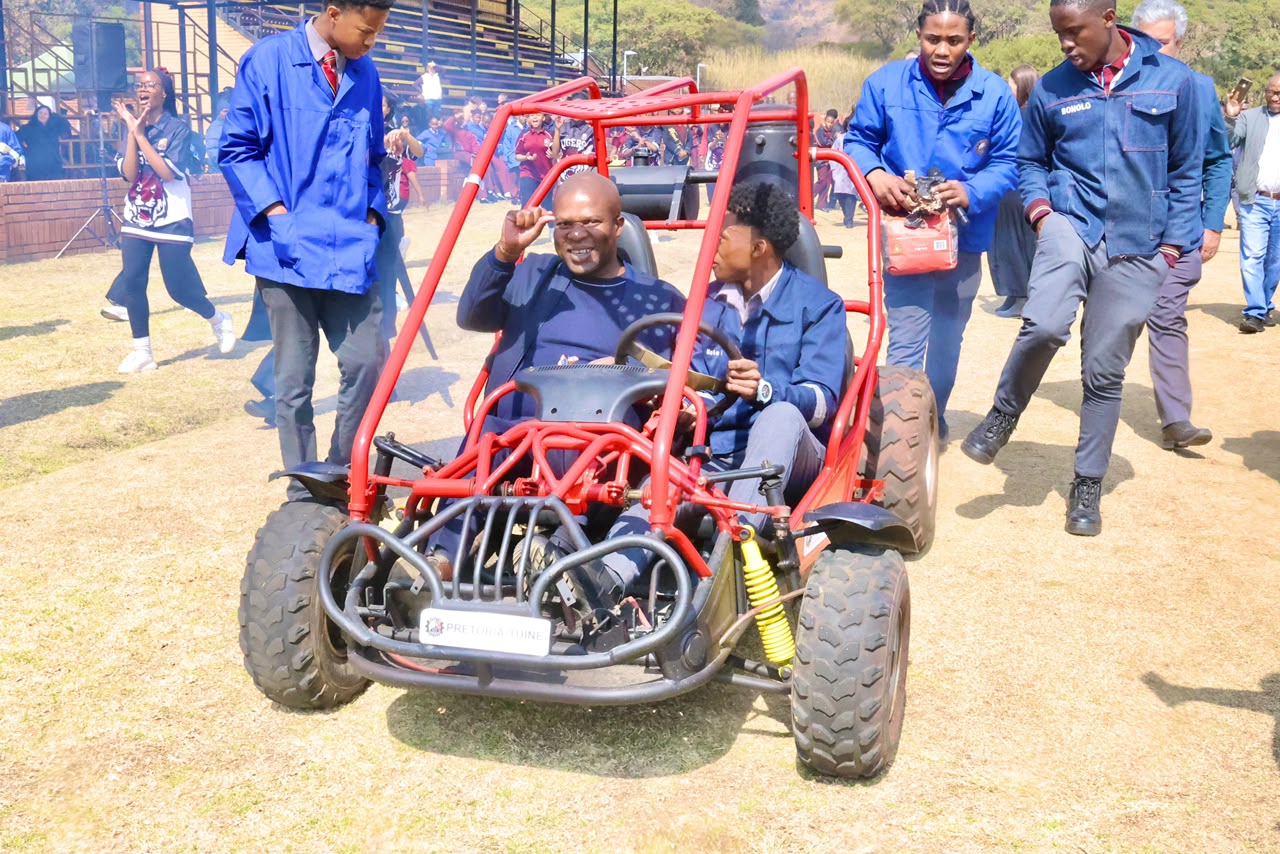
The Gauteng Provincial Government’s recent official launch of the Pretoria-Tuine Engineering School of Specialisation—with a deliberate focus on Automotive and Manufacturing—represents a major structural step in directly linking secondary education with regional industrial development.
Unveiled on Friday, 14 August 2026, Pretoria-Tuine marks the establishment of Gauteng’s 39th School of Specialisation. The launch brings the province within striking distance of its long-term strategic target to establish 40 specialized institutions between 2015 and 2030, a vision conceptualised in 2014 following extensive research into local economic skill deficits. Notably, Pretoria-Tuine also achieves a national milestone by becoming South Africa’s first Afrikaans-English dual-medium School of Specialisation.
Strategic Alignment with the Northern Economic Corridor
Located in the City of Tshwane, the school sits at the heart of Gauteng’s Northern Economic Corridor—a hub long defined by automotive manufacturing, industrial research, and heavy engineering. Rather than treating education as an isolated public service, the province’s Transformation, Modernisation and Reindustrialisation (TMR) agenda positions secondary schools as direct catalysts for economic participation, artisan production, and industrial growth.
The shift addresses a longstanding economic mismatch: traditional academic curricula often fail to equip school-leavers with the practical, modern skills required by local manufacturing ecosystems. By embedding digital manufacturing, robotics, and automation directly into the secondary school syllabus, the programme aims to build a sustainable talent pipeline for high-value technical sectors.
Building on Decades of Technical Excellence
While its official conversion into a School of Specialisation is recent, Pretoria-Tuine is not starting from scratch. Founded in 1963 with just 252 students, the institution brings over six decades of technical training heritage to the initiative.
Today, the public secondary school serves 793 learners supported by 43 staff members. Crucially, the school’s academic foundation is robust; its matric pass rate rose from 93.9% in 2024 to 95.4% in 2025, demonstrating that technical specialization is being built alongside high academic standard compliance.
The school’s physical infrastructure reflects this dual focus, housing specialised learning environments across three core engineering disciplines:
- Electrical Technology: Spanning power systems, electronics, and digital technology.
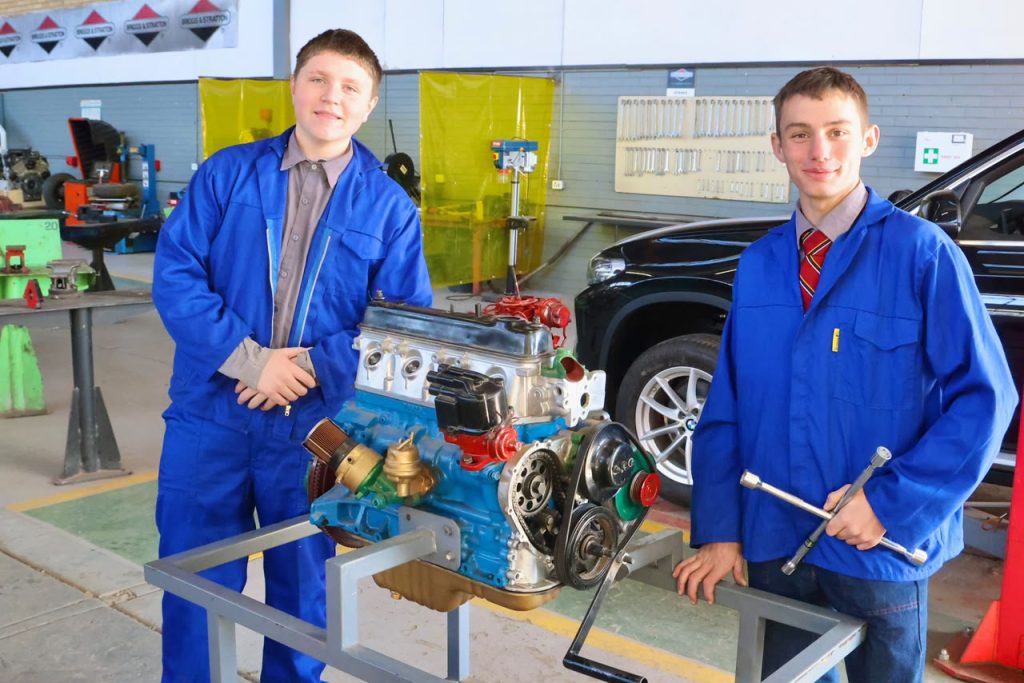
- Mechanical Technology: Covering fitting and turning, welding, metalwork, and automotive engineering.
- Civil Technology: Encompassing woodworking, civil services, and building construction.
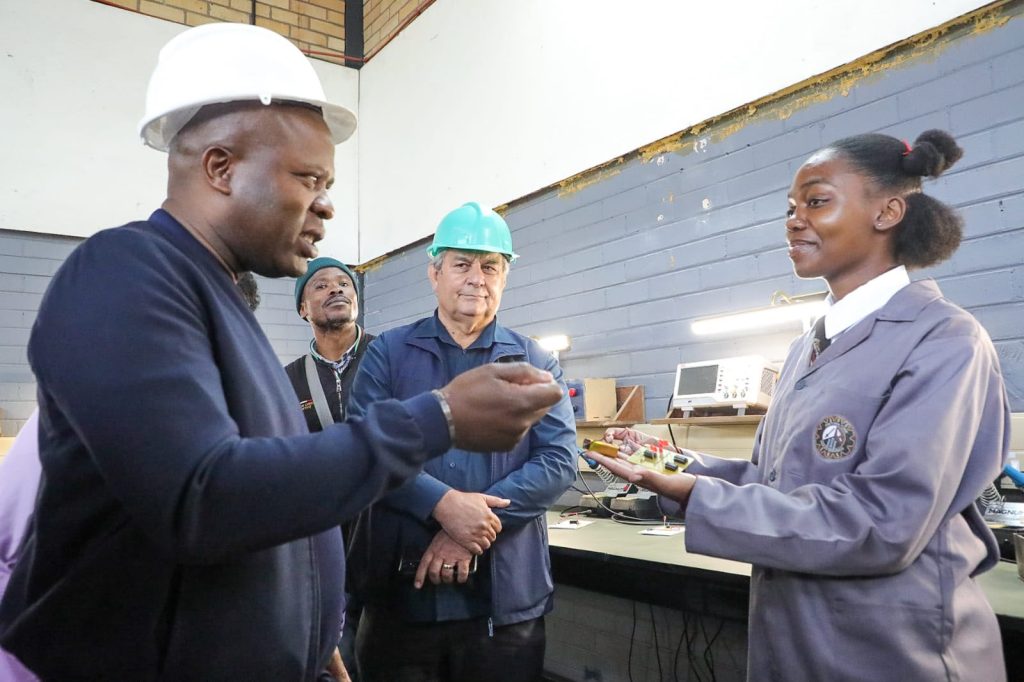
These facilities are supplemented by a modern Robotics Centre, Computer Applications Technology labs, and active participation in competitive technical platforms, including Greenpower vehicle design, Formula One CO2 Car competitions, and national robotics challenges.
Public-Private Partnerships as an Economic Engine
A core pillar of the Gauteng Department of Education’s strategy is the recognition that the state cannot modernise technical training in isolation. The integration of private enterprise and community partners is central to ensuring that the equipment, methodologies, and certifications provided remain aligned with rapidly changing industry requirements.

At Pretoria-Tuine, industry partners have stepped in to supply:
- Capital and Materials: Workshop machinery, robotics hardware, engine assemblies, and structural steel.
- Workplace Exposure: Apprenticeship pipelines, technical mentorship, and multi-certification programmes.
- Commercial Integration: Assistance with marketing and selling products manufactured directly by learners in school workshops.
This public-private collaboration creates a dual benefit: local manufacturing firms secure a predictable pipeline of job-ready technicians and artisans, while young graduates gain clear pathways into employment, higher education, or technical entrepreneurship.
A Model for Industrial Transformation
As Gauteng approaches its 2030 goal of 40 specialized schools, institutions like Pretoria-Tuine serve as a testing ground for economic transformation. By turning classrooms into innovation hubs and workshops into enterprise incubators, the provincial government is seeking to transform technical education from a passive credential into an active driver of reindustrialisation, youth employment, and sustainable macroeconomic growth.