
 By
By 
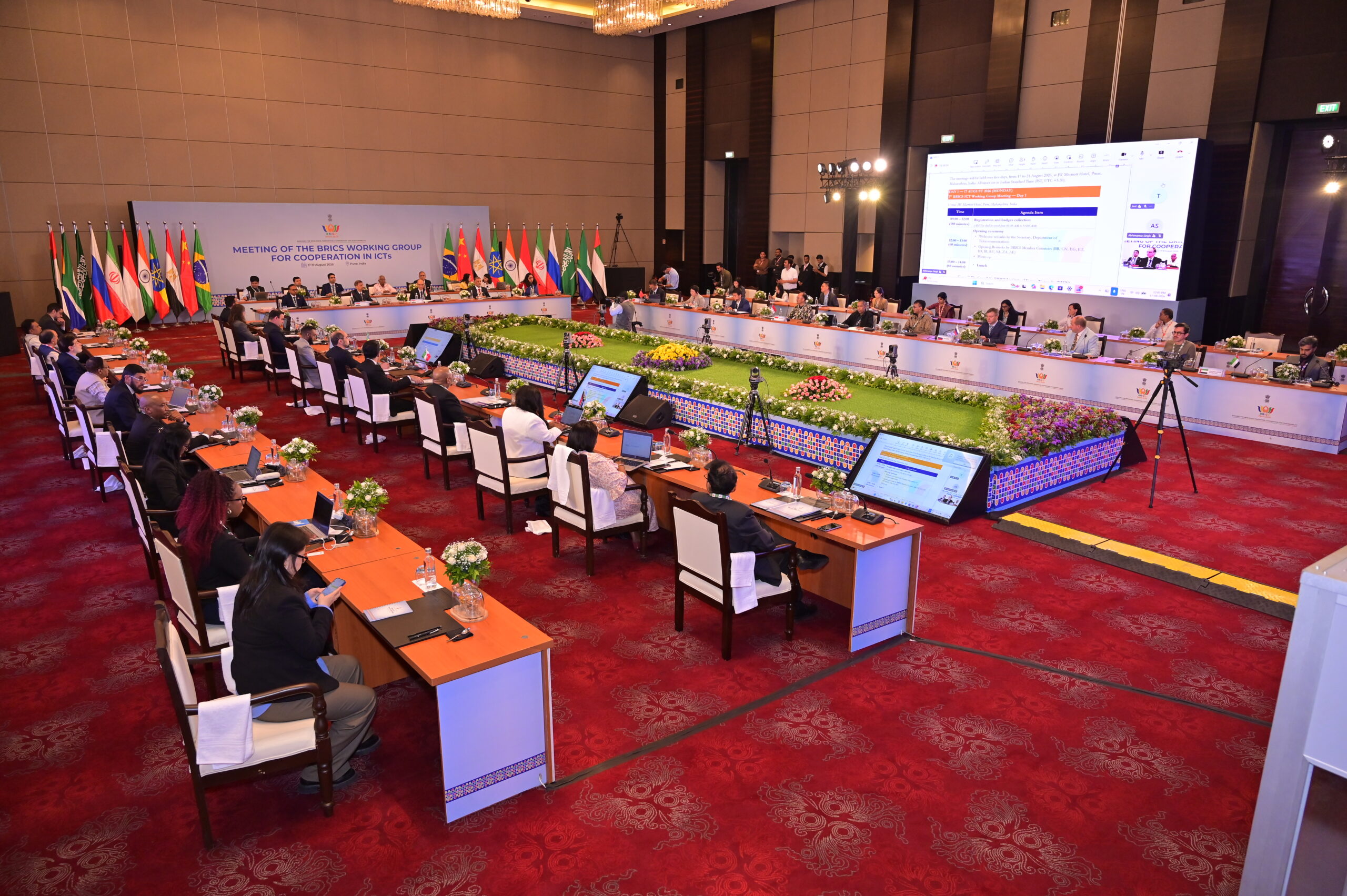
NEW DELHI — In a bid to reshape global climate action and reframe the trade-off between growth and ecology, senior officials from the BRICS bloc convened at Bharat Mandapam in New Delhi.
The high-level meeting of the Environment Working Group and the Contact Group on Climate Change and Sustainable Development signals a critical transition point for emerging economies seeking a unified, pragmatic approach to global sustainability.
Chaired by Shri Tanmay Kumar, Secretary of India’s Ministry of Environment, Forest and Climate Change (MoEFCC), the gathering served as the preparatory bedrock for the 12th BRICS Environment Ministers’ Meeting. Beyond diplomatic protocol, the proceedings underscored how the expanded alliance—representing a major share of the global population, industrial capacity, and natural resources—intends to balance rapid economic expansion with urgent environmental stewardship.
Evolution of a Macro-Economic Alliance
Over the past two decades, BRICS has evolved from an economic dialogue into an influential geopolitical platform capable of asserting its priorities on the international stage. The New Delhi discussions emphasized that economic resilience can no longer be detached from environmental stability.
Addressing delegates, the Chair highlighted that the alliance’s agenda has broadened significantly beyond basic trade and monetary cooperation to encompass:
- Climate Resilience & Adaptation: Building infrastructure and policy frameworks that can withstand climate shocks.
- Resource Efficiency & Circular Economy: Decoupling industrial growth from resource depletion.
- Environmental Governance: Aligning regulatory standards across diverse emerging markets.
Under the 2026 Chairship theme, “Building for Resilience, Innovation, Cooperation, and Sustainability,” India outlined an approach anchored in the vision of a “humanity-first” framework. For global business leaders and economists watching the summit, the message is clear: sustainable development policies across the Global South will increasingly prioritize human-centric, inclusive economic growth alongside decarbonisation.
Four Strategic Pillars for Emerging Markets
As BRICS expands its footprint, the alignment of environmental policy across member states creates both regulatory predictability and new opportunities for sustainable investments. The Environment Working Group highlighted four interconnected priority areas driving the current agenda:
- Promoting Sustainable Lifestyles: Shifting consumer behaviour and demand patterns to support sustainable production models.
- Afforestation, Forest Fire Management, and Disaster Resilience: Protecting natural capital and reducing the fiscal burden of environmental disasters.
- Circular Economy: Modernizing waste management and supply chains to retain material value within regional economies.
- Targeted Climate Adaptation: Implementing tailored, sector-specific strategies to safeguard agriculture, urban infrastructure, and industrial outputs.
These focus areas reflect a unanimous recognition that ecosystem restoration and economic development require integrated responses rather than isolated, piecemeal interventions.
Consensus-Building in an Expanded Bloc
The inclusion of expanded member countries—including Brazil, China, Egypt, Ethiopia, Indonesia, Iran, Russia, South Africa, and the United Arab Emirates—marks a broader regional representation. Coordinating policy across such economically diverse nations requires significant diplomatic and technical effort.
Ahead of the New Delhi meeting, member nations engaged in an intensive diplomatic campaign to establish common ground:
- 21 virtual thematic and negotiation meetings
- 10 bilateral consultations
- 2 thematic dialogues
- 2 technical webinars
This intense marathon of discussions reflects an effort to craft a unified front ahead of global negotiations, ensuring that the developmental needs of emerging markets are adequately reflected in global climate agreements.

What’s at Stake for the Global Economy?
The significance of the BRICS environmental consensus extends far beyond the summit halls. As member nations align their policies on circular economy practices and resource management, global supply chains will inevitably feel the impact. Industry leaders operating in or trading with BRICS economies can expect a gradual shift toward stricter circularity standards, greater incentives for clean technology transfer, and coordinated frameworks for nature-based solutions.
By asserting that ecological sustainability must integrate seamlessly with development objectives, the BRICS bloc is challenging traditional models that treat environmental protection as secondary to economic growth. With the Environment Ministers’ Meeting set to finalize key agreements, New Delhi’s proceedings demonstrate that the future of global green finance and climate resilience will be heavily shaped by the priorities of the Global South.