
 By
By 
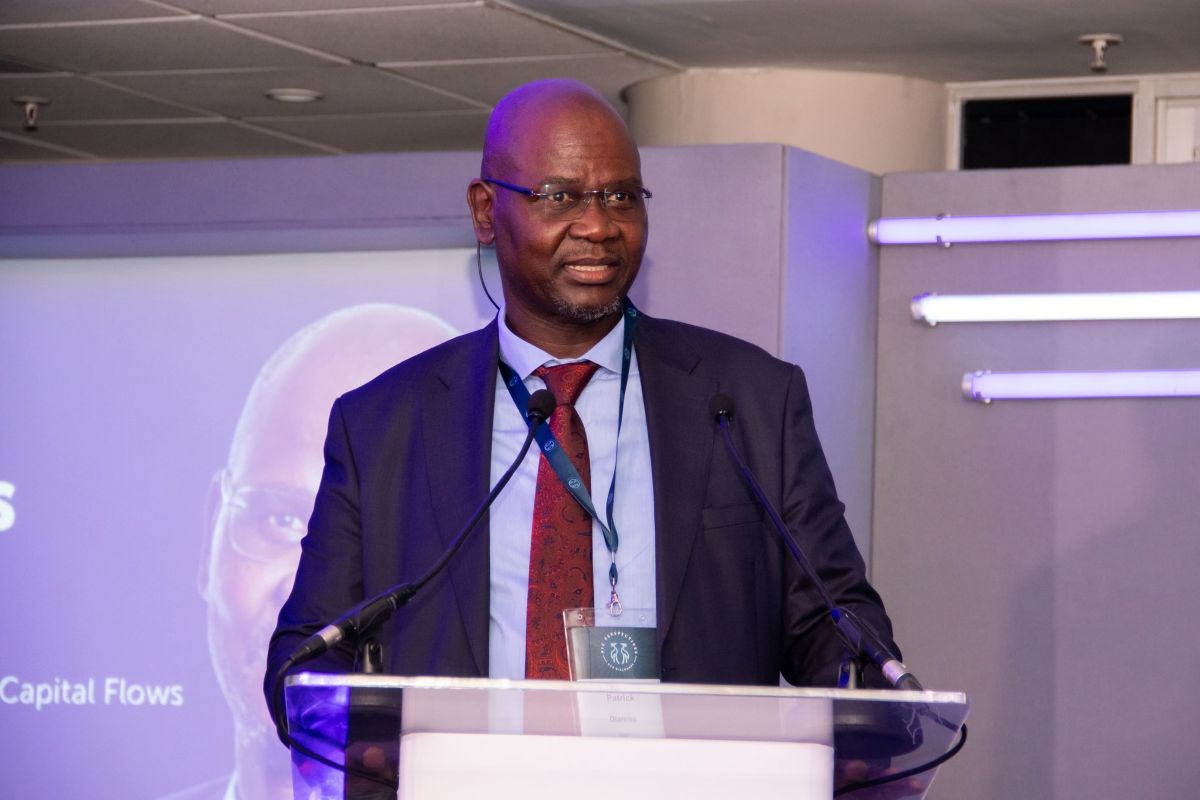
PRETORIA — In a decisive legal victory for corporate governance and executive oversight, the High Court of South Africa (Gauteng Division, Pretoria) has set aside the precautionary suspension of Public Investment Corporation (PIC) Chief Executive Officer, Mr. Patrick Khulekani Dlamini. The court declared the board’s suspension notice unlawful, invalid, and of no force or effect, paving the way for the asset manager to welcome back its chief executive.
The judgment, handed down on 04 August 2026 by Judge Mbongwe following an urgent hearing on 28 July 2026, brings an abrupt end to a high-stakes governance crisis at Africa’s largest fund manager.
A Breakdown in Statutory Governance
The dispute arose after the PIC Board served Mr. Dlamini with a precautionary suspension notice on 13 July 2026. Dlamini immediately challenged the decision in court, contending that the board lacked the statutory authority to suspend him unilaterally without following proper statutory procedures and securing ministerial approval.
In analysing the law, Judge Mbongwe highlighted Section 6 of the Public Investment Corporation Act 23 of 2004, which explicitly mandates that the CEO is appointed by the Minister of Finance in consultation with Cabinet. The role of the PIC Board in executive leadership appointments is strictly confined to selecting and recommending a suitable candidate.
Furthermore, under the PIC’s internal Delegations of Authority (DOA), any suspension of the CEO must be:
- Recommended by the Human Resources and Remuneration Committee,
- Initiated by the Chairperson, and
- Approved by the Minister of Finance in consultation with Cabinet.
“None of these prerequisites were met,” Judge Mbongwe held. “The Board acted unilaterally, without Ministerial approval, and in disregard of its own policies.” Consequently, the court ruled that the board’s decision was ultra vires (beyond its legal powers) and invalid.
Whistleblower Policies Cannot Override Statute
During the proceedings, an intervening group, Public Interest South Africa (PISA), sought to argue that the board derived authority to suspend the CEO under the corporation’s Whistleblower Policy.
The court firmly rejected this contention. Citing Clause 2.3 of the DOA, the court emphasized that in any event of inconsistency between the DOA and internal policy documents, the provisions of the DOA prevail. Referring to established Supreme Court of Appeal precedent (Cordiant Trading CC v Daimler Chrysler Financial Services), Judge Mbongwe reaffirmed that internal policies cannot override binding statutory or contractual provisions.
“Whistleblower protections safeguard whistleblowers from retaliation. They do not, however, confer powers of suspension on the board,” the court noted.
Risk of “Grave Economic Harm”
In evaluating urgency under Rule 6(12), the High Court painted a stark picture of the broader macroeconomic stakes. Following the improper suspension, the Minister of Finance convened a shareholders’ meeting on 27 July 2026 to resolve the governance breakdown. In the wake of the suspension, several non-executive directors—including the Chairperson (Deputy Minister of Finance)—resigned.
Invoking the landmark Constitutional Court ruling in National Treasury v Opposition to Urban Tolling Alliance (OUTA), Judge Mbongwe stressed that the judiciary has a constitutional duty to protect the public interest and prevent systemic economic harm.
“The invalid suspension of the PIC’s Chief Executive Officer and the sudden resignations of several board members pose a grave threat to the stability of government investments across numerous sectors of the economy. The potential destabilisation of the PIC carries with it the risk of massive economic harm to the national economy; harm so profound that it is, in truth, too ghastly to contemplate.”
Interventions Dismissed and Costs Awarded

The court also dismissed two intervention applications:
- Mr. Jabu Happy Moche: A GEPF member whose application was deemed misconceived because his pension rights lie against the GEPF, not directly against the PIC or its CEO.
- Public Interest South Africa (PISA): Whose application for admission as amicus curiae was refused due to its partisan stance in supporting the invalid board decision.
The court ordered the PIC and its Board, jointly and severally, to pay the costs of the application, including the costs of two counsel on Scale C.
Ready to Welcome Back the CEO
With the High Court having completely set aside the board’s unlawful actions, the state-backed asset manager is preparing to welcome back its suspended CEO. The ruling restores executive management at the helm of the institution while delivering a stern reminder to state-owned enterprise boards regarding the limits of their statutory powers.