 By
By 
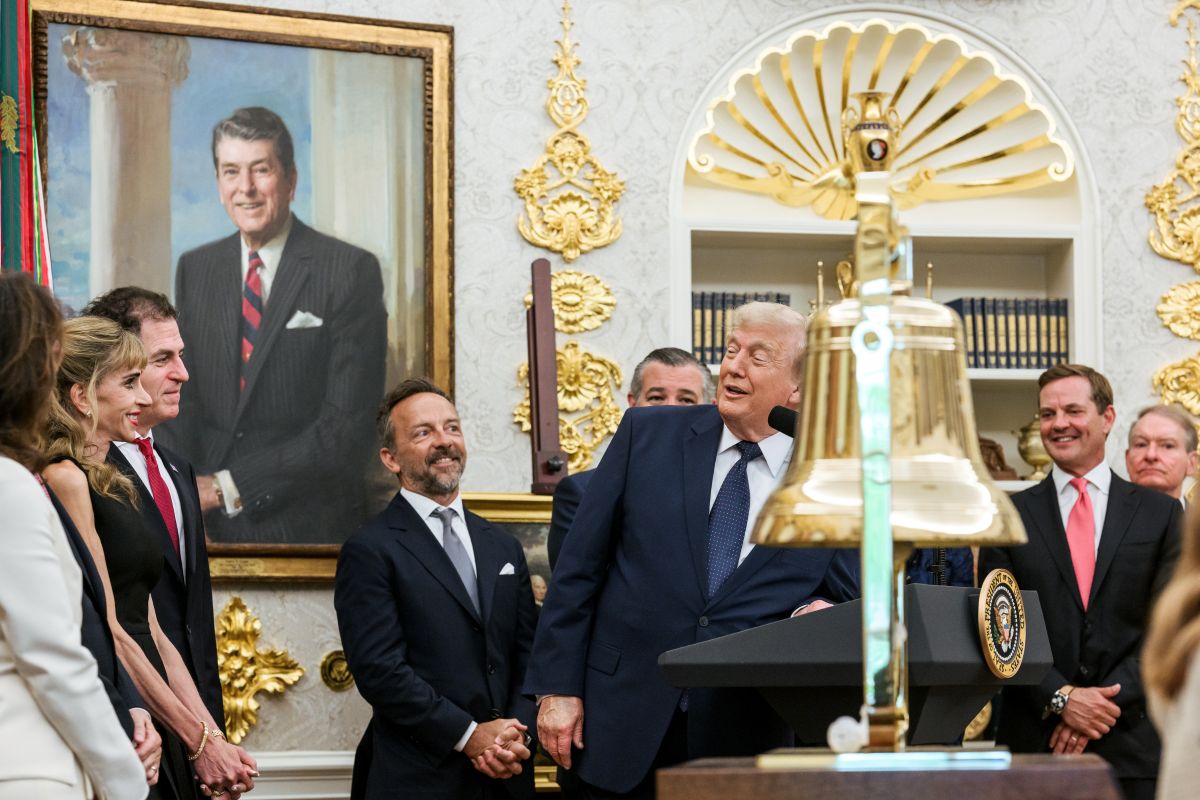
WASHINGTON, D.C. — In an unprecedented fusion of Wall Street tradition and executive action, President Donald J. Trump rang the opening bells for both the New York Stock Exchange (NYSE) and NASDAQ directly from the Oval Office. The historic ceremony marked the official launch of “Trump Accounts,” a sweeping, tax-advantaged savings initiative aimed at building generational wealth for the nation’s youth.
The program, established under the Working Families Tax Cuts Act, represents one of the most aggressive legislative efforts in modern history to democratize equity markets. According to administration officials, the rollout will see an estimated $800 million in capital deployed into U.S. financial markets this week alone through a combination of public seed funds and private contributions.
Capitalists from the Cradle
The core mechanism of the program targets America’s youngest citizens. Every U.S. citizen under the age of 18 is eligible to open an account for free. Notably, children born between January 1, 2025, and December 31, 2028, will receive an automatic $1,000 seed investment financed by the federal government.
The administration’s stated objective is to transform a generation of savers into a generation of shareholders. Treasury Secretary Scott Bessent highlighted the stark demographic gap the policy intends to close, noting that roughly 38% of American families currently hold no exposure to equity markets.
“Through Trump Accounts, President Trump is creating an ownership economy where all citizens become shareholders,” Bessent stated, adding that the ultimate goal is to reduce the percentage of market-excluded families to zero.
Financial analysts note that the compounding power of a $1,000 baseline investment, held over an 18-year horizon, could significantly alter the wealth trajectory for lower- and middle-income demographics. Initial demand appears to validate this focus: of the more than six million accounts already requested, over 86% belong to families earning less than $200,000 annually.
Corporate America Answers the Call
The launch has drawn significant backing from top-tier institutional and technology leaders, who view the initiative as a structural shift in domestic capital markets.
“Today, every newborn American child will start their life with $1,000 invested in America’s greatest companies, compounding for the future,” said tech billionaire Michael Dell.
Alongside a cornerstone philanthropic gift from Michael and Susan Dell, more than 50 corporations have already committed to providing supplementary Trump Account contributions for their employees’ children. Wall Street leadership also turned out in full force to support the initiative. Leaders from the Intercontinental Exchange, NYSE Group, and NASDAQ underscored the program’s potential to broaden market participation.
From a macroeconomic perspective, the influx of capital from all 70 million Americans under the age of 18 represents a massive, long-term retail investor base. Brad Gerstner, Chairman and CEO of Altimeter Capital, emphasized the scale of the undertaking: “We’re committed to the next 250 [years]… All 70 million kids under the age of 18 deserve to have one of these accounts. We’re going to get the accounts open for them.”
A New Deal for Capital
Political allies are framing the policy as a conservative counterweight to traditional social safety nets. Senator Ted Cruz (R-TX) characterized the initiative as a paradigm shift in federal wealth-building strategies.
“Trump Accounts are, in many ways, Donald Trump’s New Deal — but instead of having government taking care of everyone, Trump Accounts are about making every child and every American a capitalist,” Cruz remarked.
As the United States approaches its 250th anniversary, the administration is betting heavily that this legislative framework will redefine the American Dream. By structurally embedding millions of children directly into the growth of the domestic economy, the program aims to establish an enduring ownership society. Whether these accounts can successfully insulate the next generation from broader economic volatility remains to be seen, but for now, the opening bell has rung on a massive experiment in universal investor participation.