 By
JOHANNESBURG — Exactly six months into his tenure, Gauteng MEC for Finance Nkululeko Dunga has laid bare the stark financial realities facing South Africa’s economic hub.
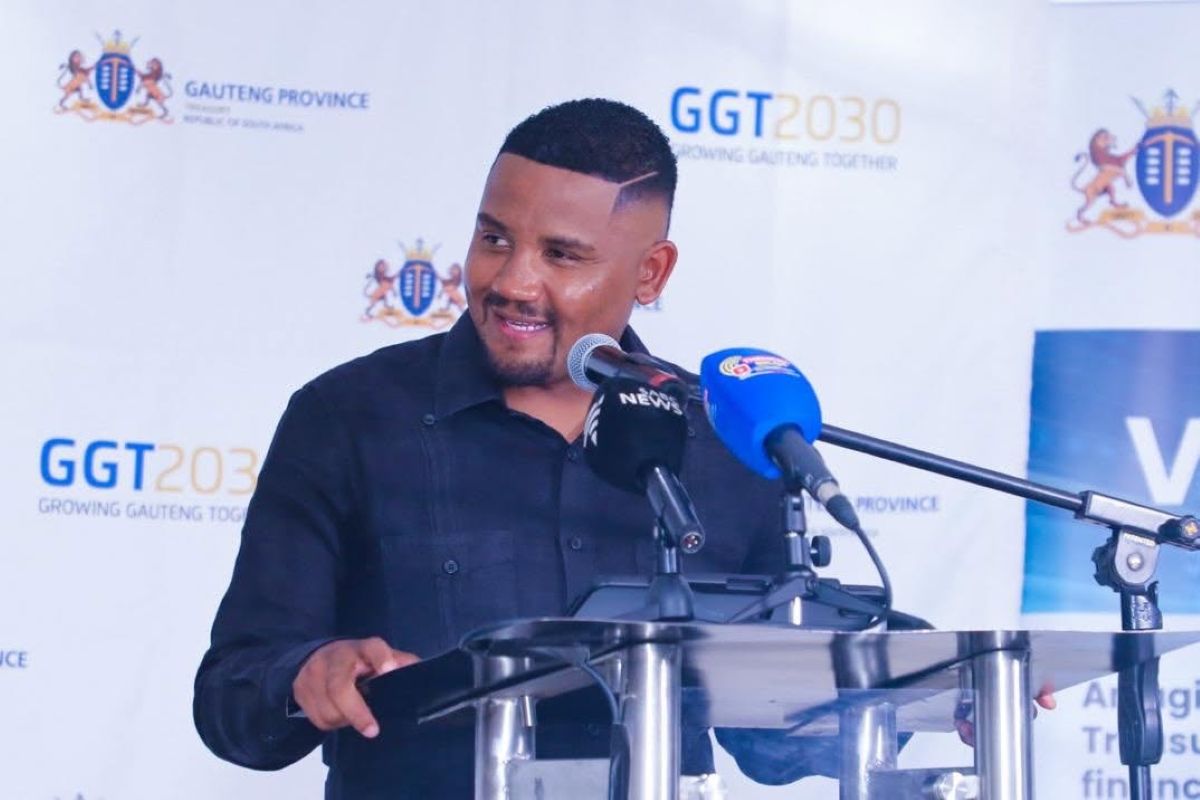
Speaking at a media and stakeholder engagement event at Emoyeni Estates on 29 October 2026, MEC Dunga delivered a transparent political and fiscal overview, outlining how the province is navigating a tight R179.2 billion budget amidst shrinking cash reserves, legacy debts, and mounting municipal friction.
Operating under a stable coalition government led by Premier Panyaza Lesufi, the Provincial Treasury has spent the past half-year addressing six major structural pressures that continue to strain public resources.
A Province Under Pressure: Debt and Shrinking Reserves
Opening his address, Dunga detailed the heavy fiscal burdens inherited by the administration, chief among them being legacy infrastructure liabilities.
- E-Toll and DBSA Liabilities: Gauteng’s agreement to carry 30% of the SANRAL e-toll debt has left a total liability of R20.1 billion including interest, payable over five years. By the end of September 2026, the province had paid down R14.1 billion, leaving a balance of R6.2 billion. An instalment of R3.3 billion is due on 30 June 2027, with full settlement expected by June 2028. Combined with a Development Bank of Southern Africa (DBSA) loan balance of R5.6 billion stretching to 2033, these legacy debts total R11.75 billion—funds that directly compete with the delivery of clinics, classrooms, and housing.
- Depleted Cash Reserves: Cash and cash equivalents experienced a sharp decline, falling from R9.8 billion in March 2025 to R5.8 billion in March 2026—a R4 billion drop in a single year that has eliminated the province’s financial breathing room.
- Declining Revenue Streams: Own-revenue contracted by 15.9% last year, dropping from R8.6 billion to R7.2 billion. This slump is driven by a sluggish economy—where Gauteng’s unemployment rate sat at 33.1% in 2025—and technological shifts. Land-based gambling revenues have plummeted as players migrate online, leaving the Department of Economic Development having collected only R343 million (23%) of its R1.46 billion target by August. Furthermore, 78.9% of provincial revenue (R139.1 billion last year) depends on national equitable share transfers, which are themselves increasingly constrained.
The Municipal Arrears Crisis and the Equitable Share Threat
A critical point of tension highlighted during the briefing is the relationship between provincial departments, municipalities, and National Treasury. Following National Treasury’s intervention under Section 216(2) of the Constitution—which saw equitable share funds temporarily withheld from non-compliant municipalities—National has turned its focus to provinces, warning that provincial allocations could be frozen if departments fail to settle municipal bills within 30 days.
While acknowledging the necessity of accountability, Dunga cautioned against blanket financial penalties. “The equitable share is not a bonus paid to politicians. It pays teachers, nurses, doctors, social workers and police reservists,” Dunga stated, emphasizing that nearly 80% of provincial revenue is tied up in these transfers.
To safeguard the province’s equitable share, Gauteng is aggressively cleaning up its own ledger:
- Centralised Budget Control: The Executive Council has approved centralising the provincial budget for municipal rates and taxes under the Provincial Treasury to strictly monitor and execute payments.
- Property Verification: Provincial properties have been cross-verified against Deeds Office records to ensure the state pays only for buildings it officially owns.
- Addressing Arrears: By the end of August, provincial departments owed municipalities R2.7 billion, which was reduced to R2.5 billion following a R164 million payment. The Department of Infrastructure Development accounts for roughly R1 billion of the debt, while Education owes approximately R981 million.
Corrective Measures: Revenue Enhancement and Expenditure Control
To steer the province toward fiscal stability, the Treasury has accelerated several corrective interventions:
- Expanding the Tax Base: The Gauteng Gambling Amendment Bill, 2026, aims to regulate and license online gambling, while casino taxation is transitioning from a flat rate to a flexible scale between 8% and 15%. Additionally, motor vehicle licence fee banking is being reclaimed from municipalities, and a specialized debt recovery panel is being appointed.
- Tackling Accruals and Overspending: Unpaid bills for goods and services received (accruals) stood at R11.3 billion as of 31 March 2026, down 9% from the previous year. However, Health alone carries R5.5 billion in unpaid invoices, and Education carries R1.9 billion. Because prior-year invoices are being settled from current budgets, the province projected a potential overspending of R3.6 billion by August. Treasury has enforced strict budget ceilings to break this cycle.
- Supplier Payment Performance: Year-to-date, 82% of invoices across the province have been settled within 30 days (up from 60% previously), with township suppliers paid within 30 days in 97% of cases.
- Wage Bill and Public-Private Partnerships (PPPs): The public wage bill remains the largest expenditure item at R110.9 billion. Treasury has instituted strict verification protocols, approving the affordability of 5,680 posts across 12 departments between April and August to protect essential frontline vacancies. Concurrently, road-shows held in August identified over 20 potential PPP projects spanning schools, hospitals, roads, water, and energy infrastructure.
Looking Ahead
As the Provincial Treasury prepares to table the Medium-Term Budget Policy Statement and the Adjustments Budget, MEC Dunga emphasized that sustainable recovery must be built on absolute transparency.
“The truth is where any serious recovery must begin,” Dunga concluded. Despite the headwinds of legacy debt, shrinking reserves, and complex coalition dynamics, the Gauteng Provincial Treasury remains resolute in maintaining fiscal discipline and safeguarding public service delivery for its citizens.