
 By
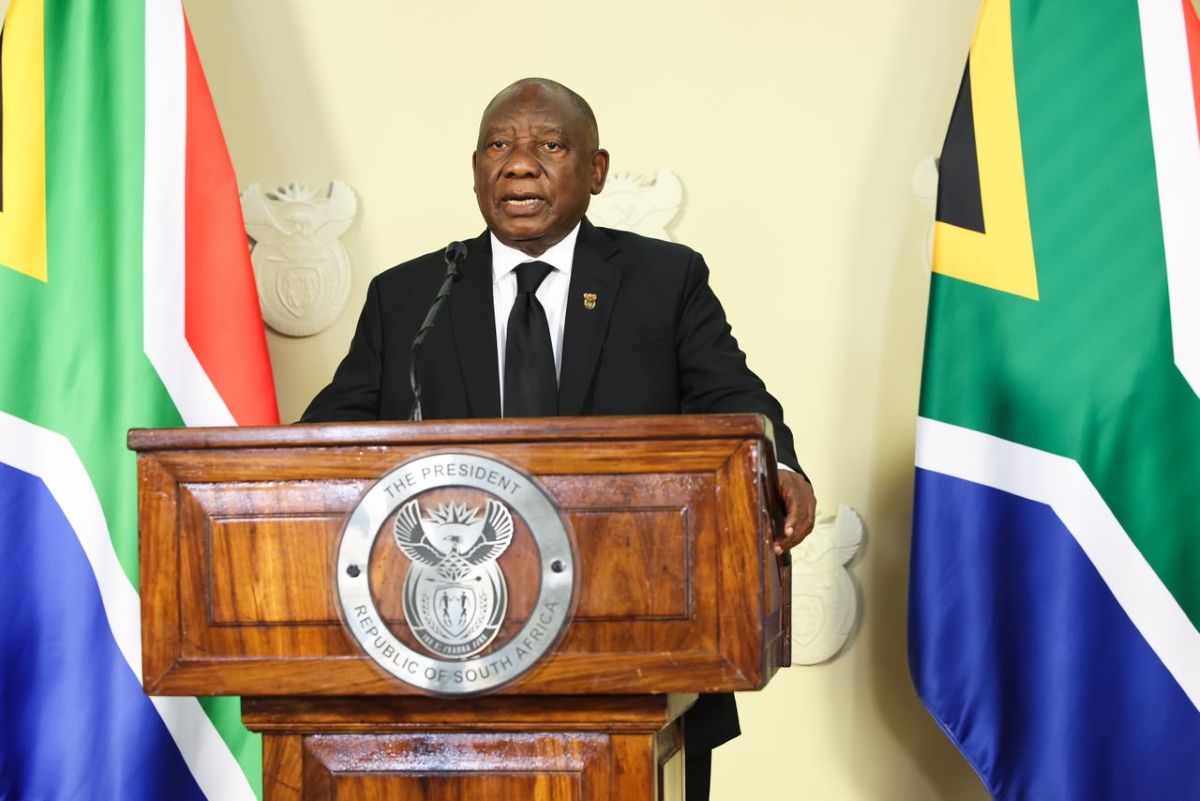
By PRETORIA — In a somber and emotionally charged address to the nation on Tuesday night, President Cyril Ramaphosa confronted what he termed a “national shame,” laying bare the state’s past failures in tackling South Africa’s unrelenting scourge of gender-based violence and femicide (GBV).

Speaking from the Union Buildings, Ramaphosa’s tone was starkly different from typical political addresses—marked by a rare, unfiltered admission of state shortcomings and an urgent, direct challenge to the nation’s men.
The address was catalysed by a horrific spike in violence, most notably in Ekurhuleni, where the bodies of 11 women have been discovered since July. Among the victims whose names have pierced the national consciousness are Busisiwe Mahlangu, Itumeleng Kekana, and Ntombifuthi Nxumalo, whose body was found just days prior.
But the crisis extends far beyond Gauteng’s industrial hub. Ramaphosa rattled off a grim roll call of victims nationwide: ten-year-old Octavia Swarts in Kraaifontein, seventy-three-year-old grandmother Mariette Mouton in Bredasdorp, and university security officer Christina Nyalungu in Limpopo.
“How can our hearts not be broken? How can we not be angry?” Ramaphosa asked the nation. “The violence being perpetrated against women in this country is inhuman… What we have done has not been enough. We need to do much more.”
A Familiar Crisis, New Deadlines
The psychological weight of the moment was palpable as the President acknowledged a haunting parallel: seven years ago, in the same month, he stood before South Africans to address the exact same national emergency. While the names of the victims are tragic additions to a growing ledger, the systemic failure to protect them remains a recurring trauma.
To move beyond mere rhetoric, Ramaphosa announced four immediate, time-bound measures backed by rigid municipal and ministerial deadlines, aiming to upend a criminal justice system plagued by backlogs and institutional indifference.
First, the government has ordered a national case-recovery operation within 60 days, targeting unresolved murders, rapes, and serious sexual offenses against women and children. Individual recovery plans for stalled cases must be operational within 90 days.
Second, law enforcement and forensic authorities have been given 60 days to present a fully funded plan to slash forensic backlogs, with priority DNA samples in rape and murder cases ring-fenced for immediate processing. Quarterly public reports will track compliance.
Third, shifting focus to situational prevention, every municipality must launch a comprehensive women’s safety audit within 60 days. The audits will identify hazardous environmental factors—such as broken streetlights, overgrown public spaces, and abandoned buildings—that create fertile ground for predators.
Urgent hazards must be addressed or scheduled in a funded implementation plan within 90 days. Furthermore, authorities are clamping down on liquor compliance, targeting unlicensed outlets that fuel interpersonal violence.
Fourth, a coordinated legislative and enforcement package to curb harmful alcohol use—a major aggravating factor in domestic and interpersonal violence—is slated for Cabinet submission within 60 days.
Dismantling Institutional Indifference
Ramaphosa did not spare state institutions from blame, highlighting the harrowing bureaucratic walls survivors face when seeking help.
“A woman who summons the courage to report abuse must not be turned away from a police station. A woman seeking a protection order must not be sent from office to office,” Ramaphosa declared, emphasizing that protection orders cannot remain “merely a piece of paper” while abusers continue their terror.
While the National Council on Gender-Based Violence and Femicide is now operational and resources are being funnelled into the Family Violence, Child Protection and Sexual Offences (FCS) units, the President stressed that structural fixes mean little without cultural accountability.
Shifting the Burden to Men
Perhaps the most resonant political pivot of the address was Ramaphosa’s sharp critique of society’s approach to prevention. For too long, he argued, the burden of combating male violence has fallen entirely on women—forcing them to alter their daily routines, avoid public spaces, and live as “prisoners of precaution.”
“The solution to violence against women cannot be to make women less free,” he stated firmly.
Directing his remarks squarely at the men and boys of South Africa, Ramaphosa insisted that the primary hotspot for GBV is inside the home and interpersonal relationships, citing Medical Research Council data showing over 60 percent of murdered women are killed by intimate partners. He called on men to dismantle toxic norms—challenging the friend who humiliates his partner, the colleague who harasses women, and the relative who turns to abuse.
Enlisting cultural heavyweights, Ramaphosa praised national sports figures like Siya Kolisi and Temba Bavuma for leveraging their platforms to preach accountability, while directing the Minister of Sport, Arts and Culture to mobilize the Moral Regeneration Movement ahead of the upcoming 16 Days of Activism against Gender-Based Violence.
A Test of Political Will
As the Inter-Ministerial Committee prepares to issue its first consolidated public progress report in ninety days, the ultimate test for Ramaphosa’s administration will not be the ambition of its directives, but the rigor of their execution.
Seven years ago, a promise was made to turn the tide. As South Africa looks toward another grueling chapter of mourning and mobilization, the President’s closing vow hung heavily in the political air: “Seven years from now, no President should have to stand before this nation and say these same words again.”