
 By
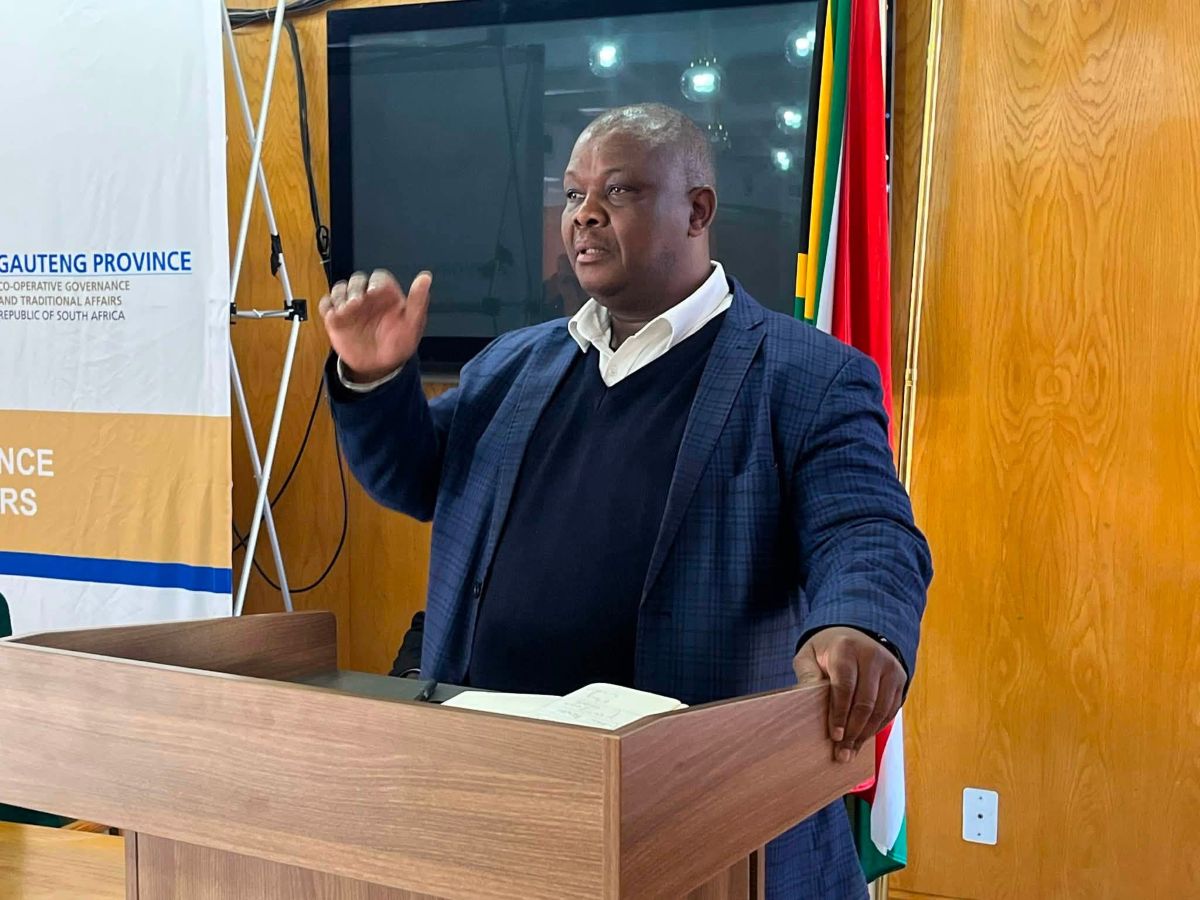
By Johannesburg — In a stern push for accountability, Gauteng MEC for Cooperative Governance and Traditional Affairs (COGTA), Jacob Mamabolo, has issued a sharp directive to municipalities across the province: tighten financial controls, plug institutional leakages, and aggressively curb unauthorized, irregular, fruitless, and wasteful expenditure.

The directive comes on the heels of a recent briefing delivered by the Governance Work stream at the weekly Intergovernmental Forum on the Gauteng Local Government Turnaround Strategy.
The forum, spearheaded by Members of Mayoral Committees (MMCs) from various municipalities, brought to light deep-seated vulnerabilities plaguing local government financial management and administrative oversight.
The Audit Reality: A Province Divided
The urgency of MEC Mamabolo’s intervention is underscored by sobering metrics from the Auditor-General’s consolidated report for the 2024/25 financial year. Out of Gauteng’s 11 municipalities, the audit outcomes expose a fragile administrative landscape:
- Clean Audits: Only two municipalities managed to secure clean audit opinions.
- Unqualified with Findings: Four municipalities received unqualified audits, though hampered by administrative and compliance findings.
- Qualified Opinions: A concerning five municipalities received qualified audit opinions, signalling material misstatements or a lack of supporting documentation in their financial statements.
Faced with these figures, MEC Mamabolo emphasized that the provincial government’s Local Government Turnaround Strategy must pivot heavily toward preventative controls, institutional accountability, and rigorous consequence management.
Municipalities have been instructed to overhaul internal controls, refine supply chain management (SCM) processes, and rigorously act against financial transgressions outlined in the Municipal Finance Management Act (MFMA).
Case Study: Inside Ekurhuleni’s Fiscal Pressures
To contextualize the broader structural challenges, the City of Ekurhuleni serves as a critical lens through which systemic governance flaws are exposed. Over a three-year review period, the metro recorded a staggering R693.7 million in combined unauthorized, irregular, fruitless, and wasteful expenditure.
A breakdown of Ekurhuleni’s financial exposure highlights:
- Unauthorised Expenditure: Approximately R397.1 million.
- Irregular Expenditure: Approximately R296.2 million.
- Fruitless and Wasteful Expenditure: R407,323.93.
Underpinning this expenditure are persistent procurement-related vulnerabilities. The City’s internal disclosures point to systemic weaknesses, including poorly specified tender scopes and deliverables, bidders failing to meet mandatory personnel criteria, and glaring inconsistencies between submitted CVs and verifiable certificates.
Furthermore, evaluators noted instances of inadequate corporate experience, incomplete financial statements, and evaluations that completely bypassed established technical requirements.
The Consequence Management Gap
Compounding these procurement discrepancies is a sluggish remediation pipeline. The City noted that none of the identified irregular expenditure has been formally condoned yet, with files still navigating administrative processes.
While Ekurhuleni managed to recover approximately R1.2 million over the three financial years, the administration reported that zero cases of financial misconduct resulted in formal disciplinary proceedings during the period.
Addressing these specific gaps, MEC Mamabolo demanded that Ekurhuleni translate its diagnostic findings into a definitive, actionable programme of correction. This includes fast-tracking investigations into irregular expenditure, aggressively pursuing legal recoveries, and ensuring that consequence management is visibly enforced where wrongdoing is proven.
Protecting Public Resources
While Ekurhuleni offers a glaring snapshot, MEC Mamabolo stressed that the call for reform is universal across all Gauteng municipalities. The turnaround strategy relies heavily on systemic cooperation to elevate financial sustainability and accelerate the delivery of basic services to residents.
“Our message to all municipalities is that public resources must be protected. Every municipality must have effective systems to prevent financial losses, identify problems early and ensure accountability when controls fail,” MEC Mamabolo concluded.
As Gauteng local governments look toward future fiscal cycles, the pressure is mounting on municipal leadership to move beyond routine reporting and deliver tangible, audit-backed institutional reform.