 By
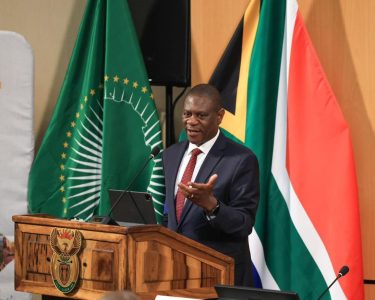
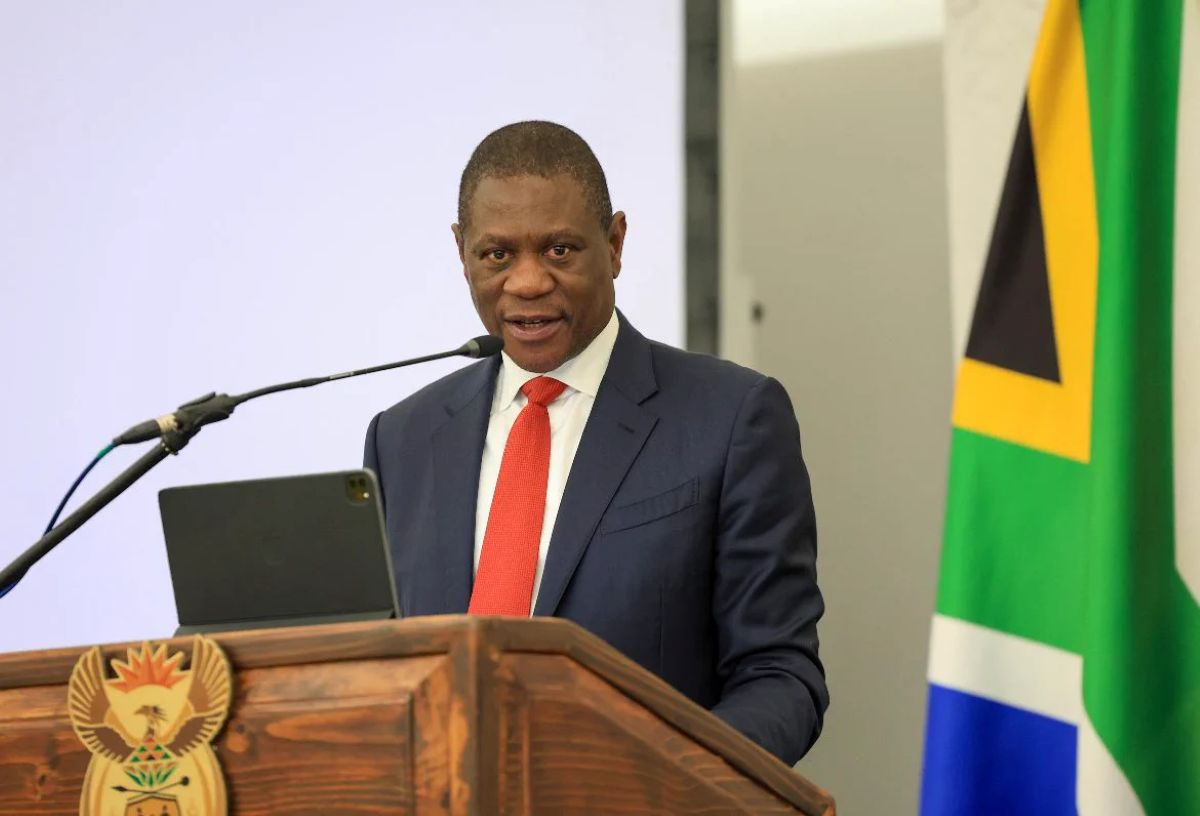
DURBAN, KwaZulu-Natal — Water security must no longer be treated as a peripheral or purely sectoral concern, but rather as a central economic pillar and a non-negotiable prerequisite for sustainable growth across Africa and the Global South, Deputy President Paul Mashatile declared on Monday.
Delivering the keynote address at the 2nd AWSISA Africa and Global South Water and Sanitation Dialogue in Durban, Mashatile framed the continent’s escalating water crisis in stark macroeconomic terms. Speaking under the theme “Accelerating Climate-Resilient Water and Sanitation Solutions for Africa and the Global South: Every Drop Counts,” he warned policymakers, investors, and development finance institutions that failing water systems directly threaten industrial productivity, raise business operating costs, and constrain broader economic expansion.
“Reliable water supply supports agriculture, manufacturing, mining, tourism, energy production, and industrial development,” Mashatile told delegates. “It enables businesses to operate, attracts investment, and creates jobs. Conversely, water insecurity undermines productivity, increases costs, and constrains economic growth. For our continent, investing in water is investing in our development.”
Closing the Infrastructure and Maintenance Deficit
Across Africa and the broader Global South, rapid urbanisation and surging industrial and domestic demand are colliding with climate-induced supply volatility—marked by prolonged droughts, erratic rainfall, and severe flooding. Compounding these environmental shocks are ageing networks, deteriorating water quality, chronic underinvestment, and municipal capacity constraints.
Reflecting on South Africa’s domestic landscape, the Deputy President acknowledged that while access to water and sanitation has expanded significantly since 1994, severe systemic bottlenecks persist. High levels of non-revenue water losses and strained municipal wastewater treatment systems underscore a critical policy pivot: the crisis is largely one of management and maintenance rather than sheer scarcity.
“We cannot continue building new infrastructure while allowing existing infrastructure to deteriorate,” Mashatile said, emphasising that capital allocation must balance green-field expansion with the urgent rehabilitation and modernisation of existing assets.
Unlocking Private Capital and Blended Finance
A central focus of the address was the financing gap facing African water utilities. Mashatile noted that the sheer scale of infrastructure development, rehabilitation, and ongoing maintenance required across the continent exceeds the fiscal capacity of public balance sheets alone.
While governments must remain central stewards of water resources, state budgets must increasingly be leveraged to crowd in private capital, development finance, and innovative blended funding mechanisms. To attract institutional and private investors, however, capital deployment must be strategic—directed toward bankable projects that demonstrably expand access, reduce operational inefficiencies, strengthen municipal governance, and guarantee long-term value.
Governance, Technology, and Human Capital
As Chairperson of South Africa’s Water Task Team, Mashatile stressed that financial commitments will fail without institutional reform and intergovernmental coordination. He called for an end to fragmented interventions in favour of integrated execution across national, provincial, and local spheres of government, backed by rigorous accountability.
To insulate water systems against climate shocks and operational leakage, the Deputy President urged the sector to diversify its supply portfolio and adopt fourth-industrial-revolution tools. Key priorities include:
- Diversified Supply Resilience: Scaling up wastewater reuse, groundwater development, rainwater harvesting, catchment protection, and targeted desalination alongside conservation.
- Smart Water Management: Deploying artificial intelligence, digital monitoring systems, smart metering, and data-driven planning to detect leaks early, optimise utility operations, and guide capital allocation.
- Sector Professionalisation: Investing heavily in human capital to build a pipeline of skilled engineers, technicians, and water managers capable of running complex utility infrastructure.
Moving from Declarations to Execution
With many of Africa’s major river basins crossing national boundaries and climate risks affecting entire regions simultaneously, Mashatile underscored that no African state can achieve long-term water security in isolation. He urged delegates—including United Nations Special Envoy on Water Retno Marsudi, regional ministers, and private-sector leaders—to use the Durban dialogue to forge cross-border partnerships that deliver measurable results.
Aligning the continent’s infrastructure push with United Nations Sustainable Development Goal 6—which targets universal access to safe drinking water and sanitation alongside improved water-use efficiency—Mashatile challenged leaders to prioritise tangible delivery over diplomatic rhetoric.
“The people of Africa are not waiting for more declarations. They are waiting for practical solutions, reliable services, and visible progress,” Mashatile concluded. “With the right choices and the right investments, water can become a catalyst for industrialisation, agricultural productivity, economic integration, and inclusive growth.”