 By
CENTURION — The South African Nuclear Energy Corporation (Necsa) has backed the outcomes of the recent Nuclear and Clean Energy Conference, signalling a push to turn long-standing energy policy into concrete industrial and procurement action.
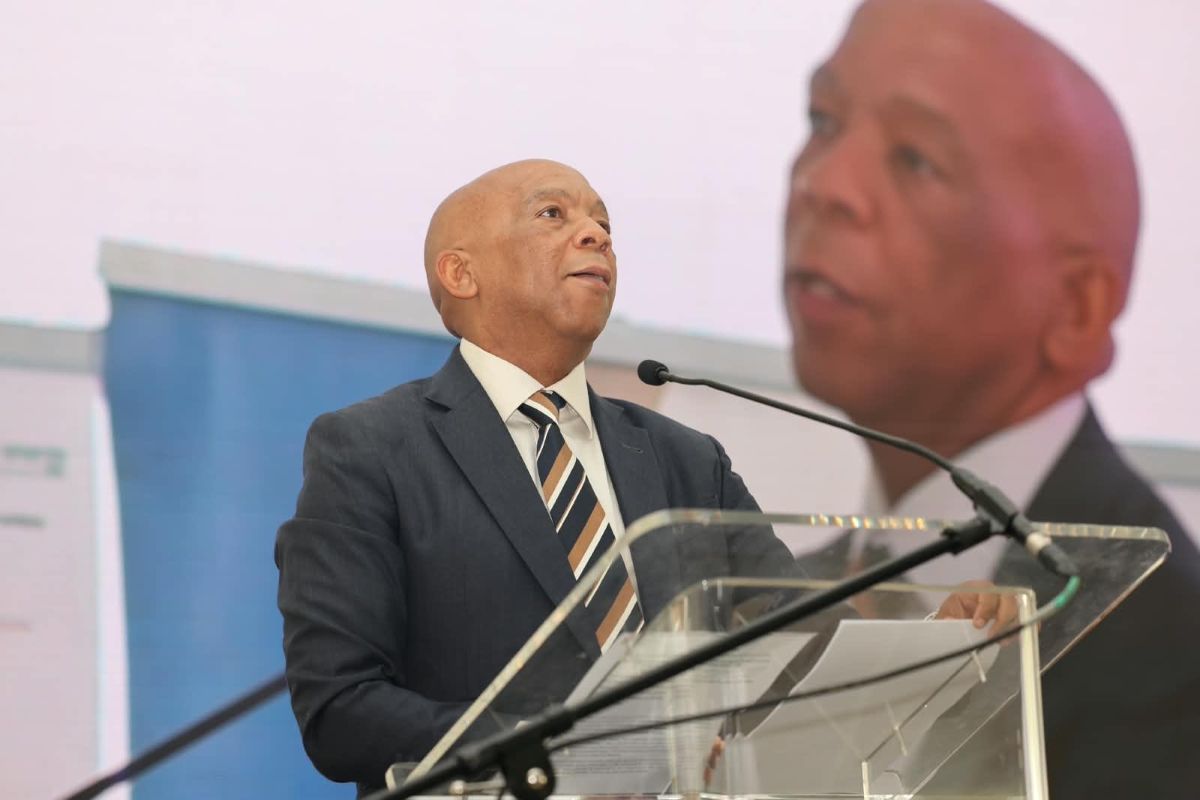
Hosted by Minister of Electricity and Energy Dr Kgosientsho Ramokgopa in Irene, Centurion, on 10 and 11 November 2026 under the theme “From Policy to Execution,” the conference laid out a roadmap aimed at advancing the country’s nuclear build ambitions.
Central to that plan is Ramokgopa’s confirmation that he will issue a ministerial determination to procure 5,200 MW of nuclear capacity, as proclaimed in the Integrated Resource Plan (IRP) 2025, subject to concurrence from the National Energy Regulator of South Africa (Nersa) and the National Treasury.
For market watchers and energy planners, the shift from strategic planning toward formal procurement and project execution marks a pivotal moment in re-establishing nuclear power within South Africa’s broader energy mix.
Rebuilding Front-End Capabilities and Local Value Chains
Speaking on Necsa’s mandate within the national programme, Group CEO Loyiso Tyabashe pointed to the IRP’s emphasis on versatile applications for Small Modular Reactors (SMRs)—spanning electricity generation, process heat, and isotope production.
Crucially for industrial policy and trade balances, Tyabashe highlighted nuclear fuel cycle beneficiation as a core strategic priority for the state-owned entity. That ambition includes efforts to re-establish South Africa’s front-end nuclear fuel cycle capabilities, specifically in:
- Uranium conversion
- Enrichment
- Fuel fabrication
Rebuilding these domestic capabilities is intended to curb reliance on imported nuclear fuel while securing supply for both existing and future reactors. From an economic standpoint, embedding local suppliers deeper into the nuclear value chain is positioned to support skilled job creation and strengthen supply-chain resilience ahead of planned new-build investments.
Financing Beyond the Fiscus and Reviving Pebble Bed IP
With fiscal space tight, how nuclear projects are financed remains a central question for investors and policymakers. Necsa Board Chairperson David Nicholls argued that international experience offers financing avenues that can reduce overreliance on state funding.
“Lessons learnt from the global nuclear build programme offers South Africa funding options which reduces overreliance on state funding. South Africa is well positioned to attract this investment. We have decades of nuclear operating experience, established regulatory institutions, world-class nuclear expertise, and organisations such as Necsa that continue to drive innovation, research, skills development, and industrial capability.”
Alongside procurement and financing discussions, Necsa welcomed the decision to move the Pebble Bed Modular Reactor (PBMR) programme out of care and maintenance. Doing so creates an opening to evaluate the retained intellectual property (IP) and examine future industrial and SMR applications.
It also safeguards specialized reactor engineering skills and coated-particle fuel research, supporting work on high-temperature gas-cooled reactor fuel as Necsa looks to scale up from its Fuel Development Laboratory toward a pilot plant.
Securing Medical Isotopes and Next-Generation Research
Beyond grid power and fuel-cycle ambitions, high-value medical and scientific output remains a cornerstone of Necsa’s commercial and research profile.
Cabinet has approved the construction of a Multi-Purpose Reactor (MPR) at Pelindaba. Designed to operate alongside SAFARI-1 during a transition window, the MPR will ensure a smooth handover from the ageing research reactor—which has operated safely since 1965 and ranks among the world’s leading medical isotope producers—to the new facility.
For the healthcare sector and export earnings, the MPR is expected to protect uninterrupted radioisotope supply to hospitals and patients both domestically and internationally. It will also expand capacity for materials and fuel testing, including neutron science, while serving as a training ground for the next generation of nuclear scientists and operators.
As these initiatives advance, Necsa stated it will continue working with the Department of Electricity and Energy and Eskom, with regulatory oversight from the National Nuclear Regulator remaining central to its operations.