 By
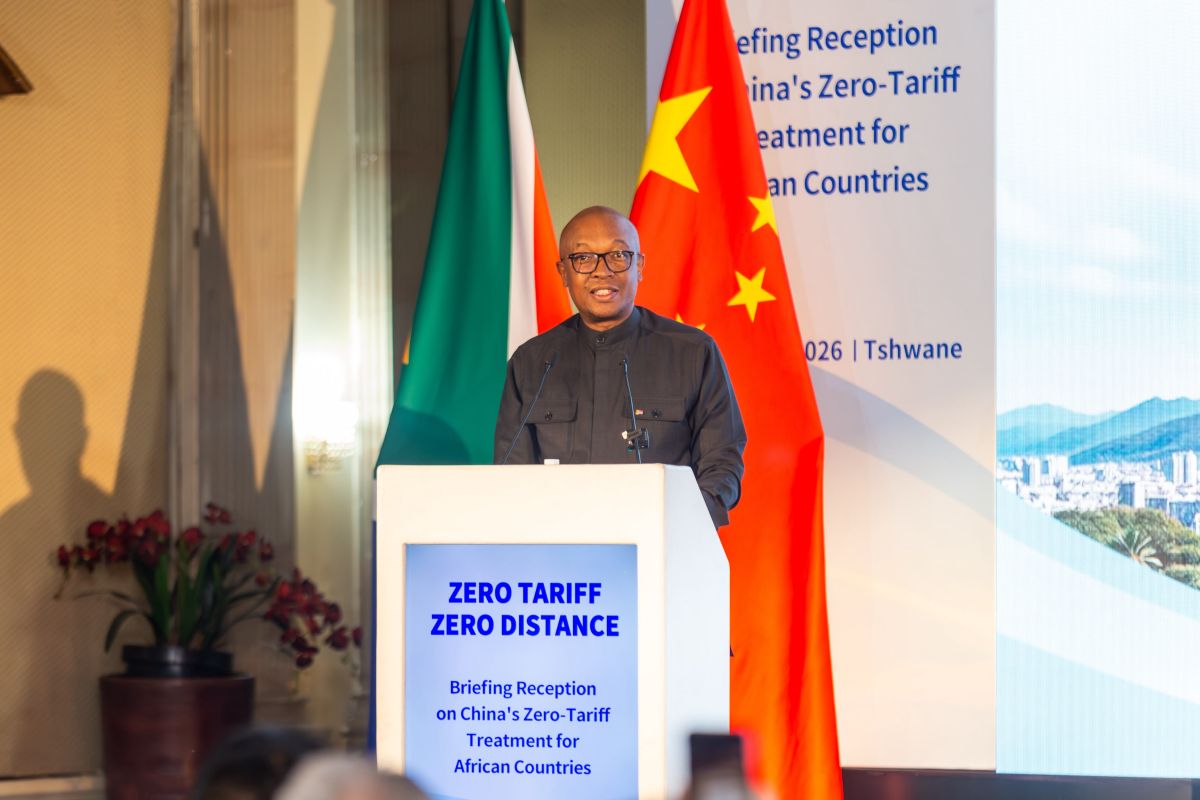
South Africa’s trade landscape is entering a transformative era, driven by strategic bilateral cooperation and visionary market diversification. Speaking at a Pretoria briefing reception regarding China’s Zero-Tariff Treatment to African Countries, the Minister of Trade, Industry and Competition, Mr Parks Tau, emphasized that the ground-breaking trade policy will provide South African exporters with long-term certainty well beyond 2028 while safeguarding domestic industries and employment.
In an increasingly unpredictable global economic climate, market diversification remains a primary pillar of the government’s strategy to protect local jobs. By securing predictable, reliable market access, South Africa aims to instil deep confidence in investors, encouraging them to expand local production capabilities.
As Minister Tau noted, the ultimate goal extends past mere trade volume growth; the focus is heavily pinned on establishing more domestic factories, localized manufacturing and processing, and sustainable jobs at home.
Unprecedented Market Access Under the Unilateral Scheme
The Zero-Tariff Treatment policy represents a major milestone for bilateral relations, functioning as a unilateral preference scheme initiated by China. Announced by President Xi Jinping on February 14, 2026, during his congratulatory message to the African Union Summit, the policy grants duty-free market access for 100% of products, with only 47 tariff lines subject to a tariff rate quota.
Under this framework, local products that comply with the rules of origin can seamlessly enter the vast Chinese market without customs duties. The initial response from the local business community has been overwhelmingly positive.
Between June 1 and August 31, the South African Revenue Service (SARS) issued 25,975 certificates of origin, coinciding with a dramatic 199 percent surge in customs declarations.
To capitalize on this momentum, South Africa’s export-promotion framework is evolving beyond isolated promotional events. The government plans to leverage a cohesive series of strategic trade fairs, targeted outward-selling missions, hosted buyer initiatives, and direct business-to-business engagements to unlock specific commercial opportunities.
Deepening Integration Through Strategic Partnerships
Beyond immediate tariff reliefs, South Africa is actively solidifying its economic framework through high-level international negotiations. Minister Tau revealed that the country is currently in the final stages of negotiating the China-Africa Economic Partnership for Shared Development.
This comprehensive agreement will pave the way for structured Memorandums of Understanding (MoUs) and targeted pacts spanning critical sectors, including trade, investment, infrastructure, logistics, small business development, and industrial growth.
Crucially, this partnership lays the groundwork for the upcoming Southern African Customs Union (SACU)-China Early Harvest Arrangement. This reciprocal trade arrangement is currently under negotiation and is specifically designed to permanently preserve the zero-tariff benefits for SACU member states over the long term.
Through these synchronized policy measures, aggressive export promotion, and structural industrial planning, South Africa is effectively positioning itself to convert global market access into enduring domestic prosperity and job security.