
 By
By JOHANNESBURG — In a sharp departure from traditional bureaucratic delays, Gauteng Premier Panyaza Lesufi has moved swiftly to operationalize President Cyril Ramaphosa’s recent national directives on Gender-Based Violence and Femicide (GBVF).

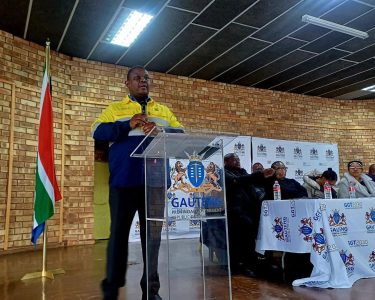
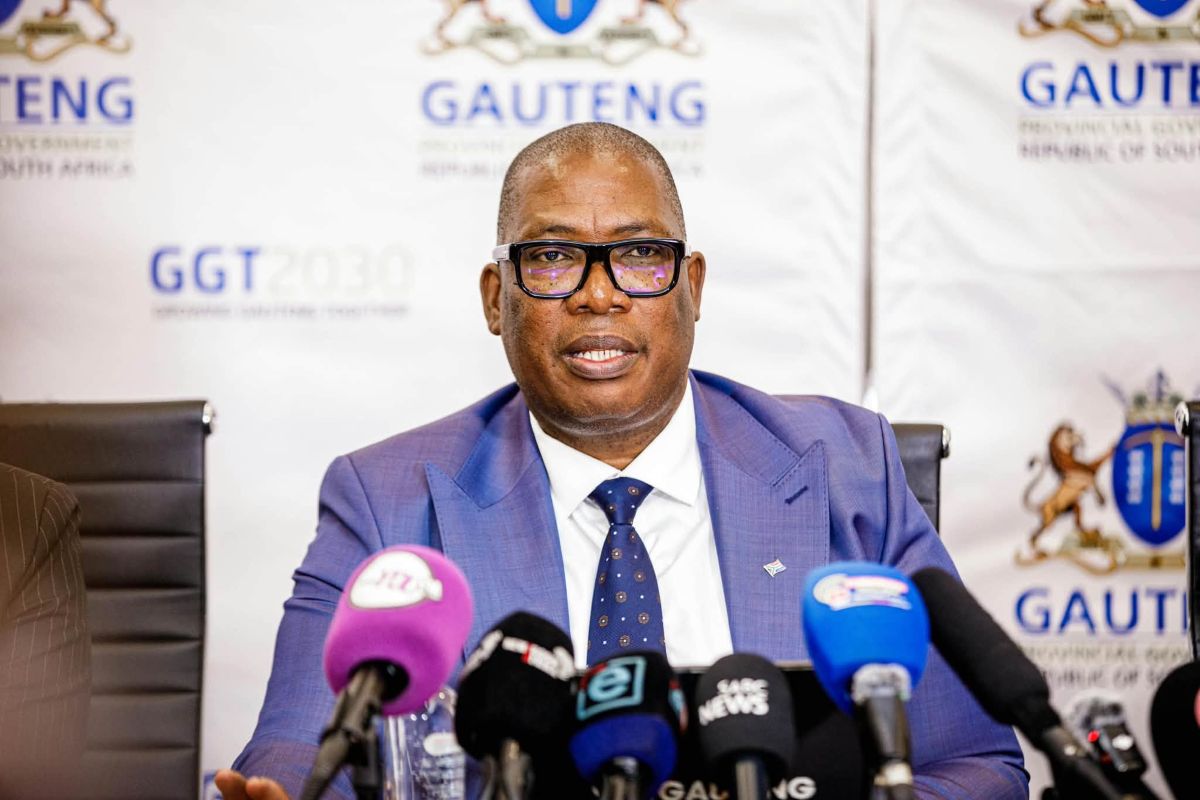
The Intergovernmental Relations (IGR) held a media briefing led by Premier Lesufi on Friday, October 2, 2026, the provincial leadership laid out an aggressive, measurable, and multi-disciplinary blueprint designed to tackle what Lesufi termed a national emergency at its roots.
With the province bearing one of the heaviest population burdens and crime statistics in the country, the message from the provincial executive was uncompromising: Gauteng will not wait for slow consensus.
By leveraging existing crisis-response architectures originally spun up for the G20 Summit and municipal water and electricity disruptions, the provincial government aims to establish a rigid, weekly tracking and reporting mechanism spanning local, provincial, and national spheres.
A Rigorous Blueprint: Case Recovery and Forensic Audits
At the heart of Lesufi’s strategy is a time-bound operational framework aimed at closing institutional gaps that have long frustrated victims and emboldened perpetrators.
Within the next 60 days, Gauteng will execute a comprehensive provincial audit covering all unresolved murders, attempted murders, rapes, and serious sexual offenses involving women and children. This audit is mandated to examine the age of pending cases, forensic backlogs, identified suspects yet to be apprehended, and systemic delays in investigations or prosecutions.
Furthermore, within 90 days, every stalled or high-priority case will be assigned an individual recovery plan featuring explicit actions, designated responsible officials, and hard deadlines.
To ensure accountability, the MEC for Community Safety and the Provincial Commissioner will spearhead these efforts in lockstep with the National Prosecuting Authority, while strictly respecting prosecutorial independence.
Simultaneously, the province is targeting crippling forensic bottlenecks. Within 60 days, Gauteng’s financial and operational contribution to a funded national plan will be locked in. Priority DNA and forensic samples linked to the rape and murder of women and children are set to be rigorously ring-fenced for urgent laboratory processing, backed by public quarterly progress reports.
Targeting High-Risk Precincts and Municipal Infrastructure
Recognizing that geography and infrastructure heavily dictate vulnerability, the provincial government is zeroing in on the ten police stations recording the highest volume of rape cases across the province.
Hard-hit communities—including Rietgat, Alexandra, Mamelodi, Diepsloot, Ivory Park, Dobsonville, Redhill, Midrand, and Thembisa—are slated for immediate reinforcement of police resources, expanded Sexual Offences Courts, and the deployment of 1,022 GBV brigades equipped with necessary tools.
On the municipal front, local governments have been instructed to initiate thorough safety audits of high-risk public spaces within seven days. These audits will identify municipal hazards such as broken streetlights, overgrown vacant lots, abandoned buildings, unsafe transport routes, and unlit parks.
Crucially, municipalities are bound to fix these hazards or place them on a funded execution plan within 90 days of audit completion.
Infrastructure rehabilitation is also receiving a direct energy boost. In a joint resolution alongside the Gauteng Energy Response Plan, the province, Eskom, and City Power have committed to installing and electrifying more than 140 transformers across the province to restore critical local lighting and grid stability.
Cracking Down on Alcohol-Related Violence and Nightlife
The provincial administration drew a direct line between unregulated substance abuse and violent crime. Aligning with an impending national legislative package heading to Cabinet within 60 days, Gauteng municipalities have already commenced aggressive, coordinated weekly by-law enforcement operations as of October 1.
These sweeps are targeting unlicensed liquor outlets, after-hours trading violations, and general urban lawlessness.
“We will intensify these operations every week to ensure that lawlessness has no place in Gauteng and that our residents can live, work, and conduct their businesses in safe, orderly, and well-managed communities,” the statement emphasized.
Expanding Support Systems and Technology
Gauteng’s fifth core intervention focuses on shoring up safe spaces and survivor support structures. The province is auditing existing shelters, identifying staffing shortages, and reinforcing specialized infrastructure, including 144 victim-friendly rooms across seven specialized sexual offences courts and 19 Medical Legal Clinics to prevent evidence degradation. Additionally, 56 new social workers are being integrated into the Department of Social Development.
Technological innovation is also being harnessed to shrink emergency response times. Technical gremlins plaguing the provincial e-Panic Button app have reportedly been resolved, and integrated CCTV networks are being leveraged to offer rapid alerts while safeguarding victim data privacy.
A Call for Collective Ownership
Acknowledging that policing and legislation alone cannot extinguish the scourge of violence, Premier Lesufi’s administration is scaling up structured partnerships with civil society groups, shelters, counselling networks, and legal aid providers, while engaging the corporate sector to overhaul workplace policies.
As Gauteng prepares to release its first consolidated baseline report on October 9, followed by regular public quarterly report cards, the provincial government hopes to shift the cultural paradigm.
Looking ahead to the upcoming international activism cycle, Lesufi’s administration expressed a firm vision: transforming the traditional sixteen days of resistance into sixteen definitive days of peace, support, and systemic recovery.