 By
PRETORIA — In a dramatic reshaping of Gauteng’s metropolitan politics, a newly forged, leftward-leaning coalition has successfully seized control of the City of Tshwane’s top leadership, shutting out the Democratic Alliance (DA) despite its status as the single largest party following the recent 2026 local government elections.
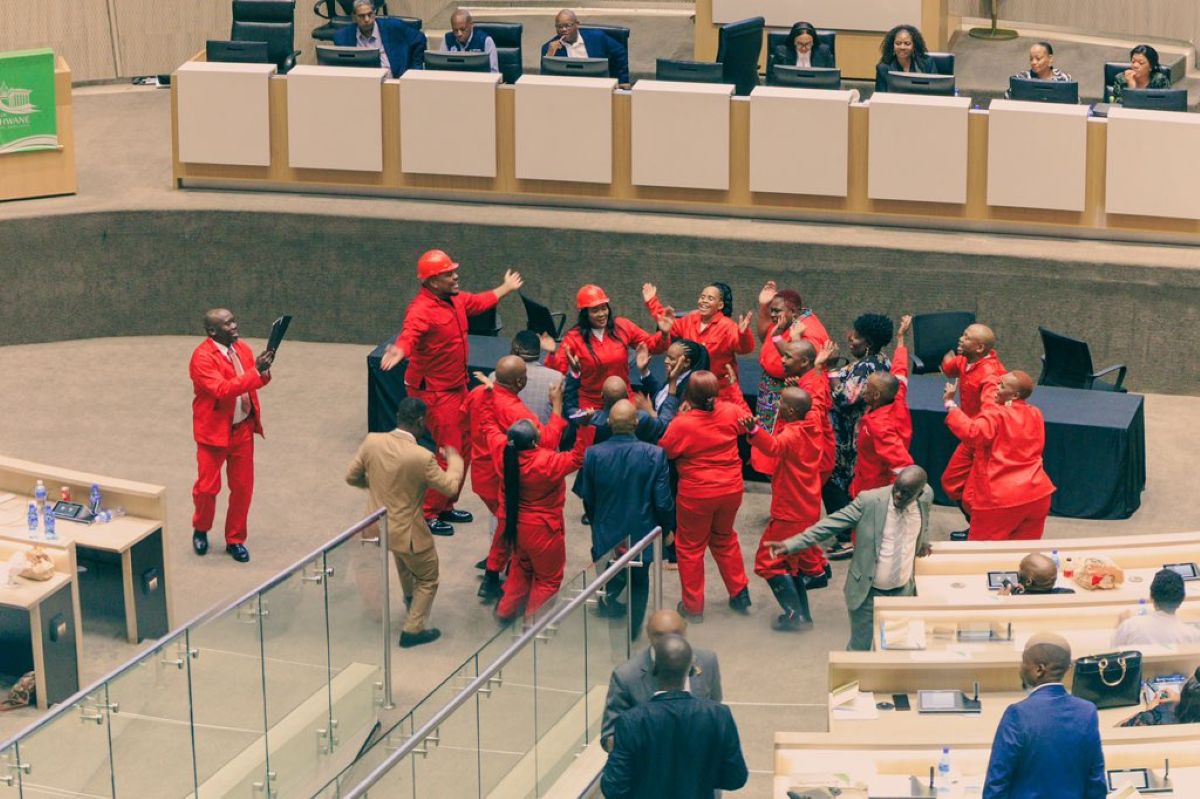
The political coup, finalised during a tense, sixth-term inaugural council sitting on Thursday, November 26, 2026, has prompted a fierce backlash from the DA. The party’s leader, Geordin Hill-Lewis, has vehemently condemned the new partnership, branding it a “coalition of chaos” that blatantly ignores the democratic will of Tshwane’s voters.
The Return of Dr Nasiphi Moya
During Thursday’s high-stakes council sitting, a determined bid to postpone the proceedings was defeated, clearing the way for councillors to vote on the metro’s leadership. The resulting tally underscored the brutal arithmetic of hung councils, where inter-party bloc-building inevitably trumps single-party pluralities as statutory deadlines loom.
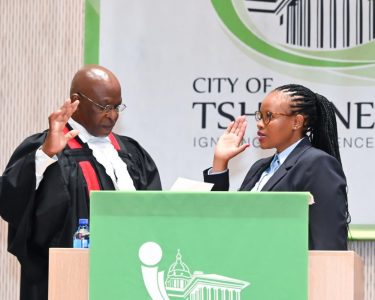
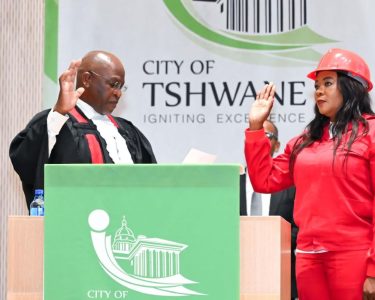
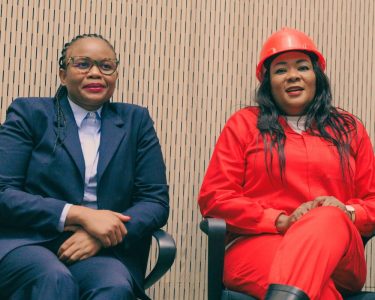
ActionSA’s Dr Nasiphi Moya was re-elected as the Executive Mayor of Tshwane, defeating the DA’s candidate and former mayor, Cilliers Brink. The multi-party deal also saw the Economic Freedom Fighters (EFF) Treasurer-General, Cllr Omphile Maotwe, take the Deputy Executive Mayor seat unopposed.
In a further division of the top tier, the African National Congress (ANC) secured both the Speaker of the Council (Cllr Naeem Patel) and the Chief Whip (Cllr April Daniel Mabona).
This sprawling power-sharing agreement—anchored by ActionSA, the ANC, and the EFF, with support from the uMkhonto weSizwe (MK) Party—effectively relegates the DA to the opposition benches. It also signals a potential blueprint for neighbouring metros like Johannesburg and Ekurhuleni, where the DA is likewise struggling to convert its leading seat-counts into governing control.
A Scathing Rebuke from the DA
Responding to the inauguration, DA Leader Geordin Hill-Lewis issued a scathing statement, arguing that the ANC-ActionSA pact was built on political greed rather than public interest.
“The DA condemns the formation of an ANC and ActionSA’s coalition of chaos in the City of Tshwane today,” Hill-Lewis declared. “Our nation’s capital deserves better than this. As do the cities of Johannesburg and Ekurhuleni.”
According to Hill-Lewis, the coalition flies in the face of the electoral mandate, asserting that the residents of Tshwane voted overwhelmingly for stable, clean government and improved service delivery.
“After weeks of negotiations; and despite putting forward reasonable proposals to both the ANC and ActionSA, these two parties deliberately chose their own narrow interests and hunger for power over your interests,” Hill-Lewis said. He warned that the incoming government would guarantee “the same or worse instability, corruption, poor service delivery, and accelerating decline.”
Despite being side-lined, Hill-Lewis promised that the DA’s 74 Tshwane councillors would robustly hold the new administration to account. “We will hold this coalition of chaos accountable every day,” he vowed, “and will be ready to pick up the pieces if and when required.”
The Volatile Path Ahead for Gauteng’s Metros
While the alliance celebrated its victory, the diverse, multi-party coalition faces immediate, formidable challenges. Translating a sprawling, ideologically disparate partnership of ActionSA, the EFF, the ANC, and MK into a stable, functional administration will be a daunting task, particularly given the historical fragility of South Africa’s municipal coalitions.
For ActionSA’s Dr Moya, the pressure will be immense. While her previous mayoral tenure gave her a prominent profile, she must now govern with the ANC and EFF watching her every move, all while attempting to pull Tshwane back from the brink of financial and administrative decline.
As Gauteng’s metropolitan centres are carved up in backroom deals, the DA’s shutout in Tshwane raises significant questions about the future of coalition governance across South Africa. With both Johannesburg and Ekurhuleni still in the throes of intense, volatile negotiations, the capital’s new leadership will be watched closely as a test of whether this “coalition of chaos”—or “government of unity,” as its founders would prefer to call it—can deliver on its promises, or if it will crumble under the weight of its own political contradictions.