 By
JOHANNESBURG — Trade, Industry and Competition Minister Parks Tau has declared South Africa’s Broad-Based Black Economic Empowerment (B-BBEE) framework at a decisive crossroads, warning that persistent structural inequality demands urgent reform rather than retreat or blind defence of the status quo.
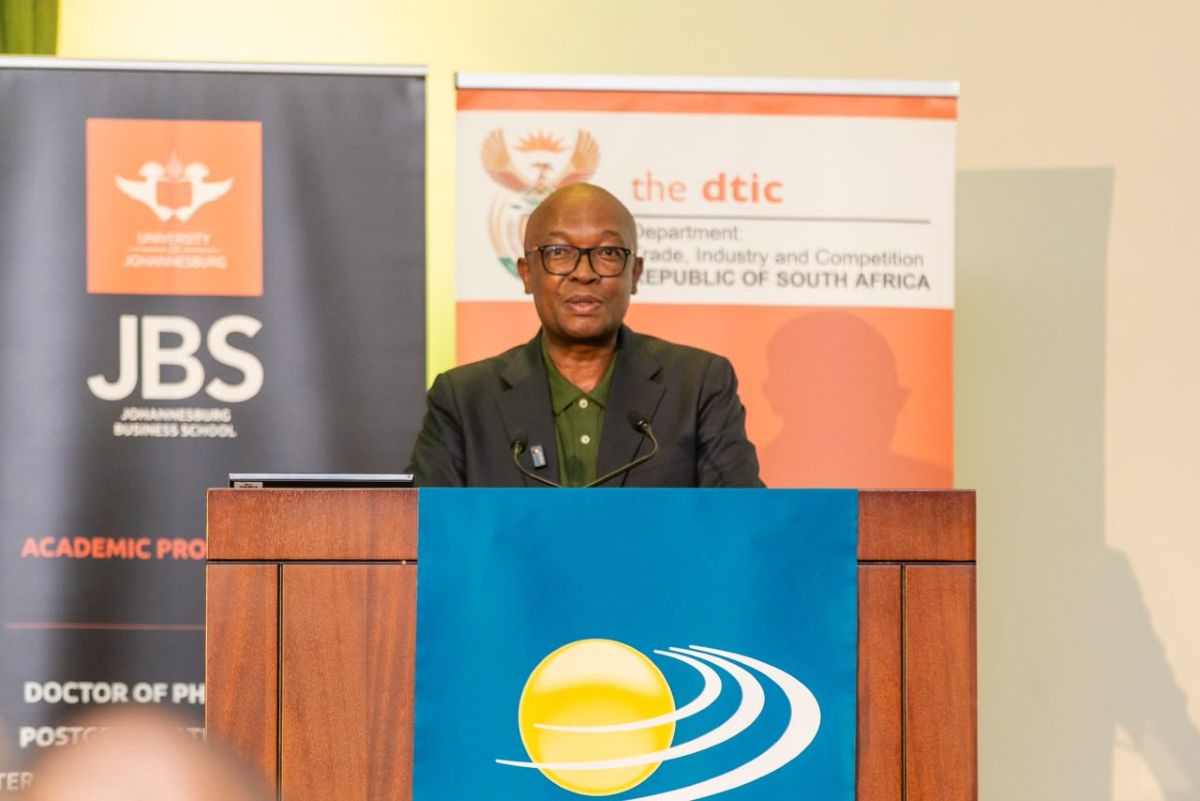
Addressing delegates on Monday at the Industrial Development Corporation (IDC) Auditorium in Sandton during the conference B-BBEE – The Next Chapter: Evidence, Reform and the Path to Meaningful Inclusion, Tau framed the policy review as a strategic necessity to strengthen transformation from within while resisting external and legal pressures.
“We are not at a crossroads because transformation has failed,” Tau said. “We are at a crossroads because transformation is under attack from more than one direction at once. Abroad, it is being recast as discrimination. At home, it is being challenged in our courts and written off in our public debate. And within our own ranks, there is a quieter danger. The danger that we defend the policy by defending its weaknesses.”
External Pressure and Domestic Realities
Tau highlighted mounting international scrutiny, pointing to a February 2025 executive order issued by the United States against South Africa that targeted empowerment requirements, followed in March 2026 by Washington demands that included ending what it termed the mandatory surrender of ownership or control as a cost of doing business.
Domestically, while attempts to halt Employment Equity targets failed in the High Court, Supreme Court of Appeal and Constitutional Court, six constitutional challenges remain pending.
Despite those headwinds, the minister ruled out trading transformation for tariff relief or abandoning constitutional imperatives. He pointed to stark economic indicators to underscore why the policy remains vital: South Africa’s unemployment rate stands at 33.7%, more than 3.7 million young people aged 15 to 24 are not in employment, education or training, and while Africans comprise 81.3% of the economically active population, they hold just 21.1% of top management roles.
“These are not the numbers of a country that has finished transforming,” Tau said. “They are the numbers of a country that has barely begun.”
At the same time, he cautioned that ideological conviction alone cannot sustain B-BBEE if practical outcomes fall short. “The most dangerous argument against B-BBEE is not ideological,” he said. “It is the argument that the policy does not work. A policy that cannot show results is a policy that can be taken away. A policy that delivers results is a policy that defends itself.”
Evidence Gaps and Nominal Ownership
Drawing on a decade-long B-BBEE Commission review covering 28,131 certificates across 56 verification agencies from 2013 to 2023, Tau noted that average ownership scores increased from 12.4 points in 2013 to 21.6 points in 2023—still below the 25-point-plus-one-vote benchmark, with momentum noticeably stalling after 2018.
Crucially, he observed that after ten years of data, the Commission could not draw firm conclusions on whether B-BBEE has reduced unemployment, inequality or poverty. “We have been measuring compliance,” Tau said. “We have not been measuring change.”
He also pointed to the Department of Trade, Industry and Competition’s (the dtic) own candid assessment in the Transformation Fund Framework that enterprise and supplier development (ESD) spending—estimated at roughly R20 billion annually—has failed to meaningfully alter the structural economic status of marginalised groups.
Too much spending, he argued, has purchased scorecard points instead of cultivating durable black-owned manufacturers, suppliers and industrialists.
Tau further criticised what he described as “nominal transformation,” where black South Africans hold equity at the bottom of value chains or lack strategic control, dividend flows and participation in higher-value segments. “If black South Africans own shares but do not control strategy, do not earn dividends, and do not participate in the high-value parts of our industries, then the scorecard has done its job and the economy has not changed,” he said.
Two-Phase Reform and Research Accountability
According to Tau, the review is advancing along a two-track process:
- Phase One (Regulatory & Codes): Draft amendments to the Codes of Good Practice were gazetted in January 2026, and on 13 November 2026 draft amended B-BBEE Regulations were published for a 30-day public comment window.
- Phase Two (Legislative): Parliament will examine substantive amendments to the B-BBEE Act itself.
The overarching shift, Tau emphasised, is from compliance to tangible outcomes, from transactions to industrialisation, and from certificate holding to owning productive assets, manufacturing, supplying and exporting.
To ground the reform process in empirical rigour, the conference—co-hosted by the dtic, the Johannesburg Business School, the IDC, the National Empowerment Fund (NEF) and the B-BBEE Commission—features at least twelve commissioned research papers subject to peer scrutiny, researcher-led panels and session rapporteurs.
An independent editorial committee at the University of Johannesburg has been empowered to publish critical findings, including assessments of co-hosts such as the dtic.
A policy brief is scheduled to reach the dtic and the Presidency within 30 days, full conference proceedings within 60 days, and an edited academic volume in 2027.
Summing up the stakes, Tau said B-BBEE’s first chapter opened the door by embedding transformation in law and boardrooms, while the next chapter must focus on real control, earning ownership and lasting enterprises.
“The world is watching to see whether South Africa will hold its nerve,” he said. “Some hope we will retreat. Others expect us to dig in and change nothing. We will do neither. We will reform this policy so that it works. And by making it work, we will make it impossible to dismiss.”