 By
As post-election coalition horse-trading intensifies across South Africa’s hung municipalities, the Democratic Alliance has unveiled a sweeping power-sharing blueprint aimed at anchoring local and national stability—while testing the ANC’s appetite for broad-centre cooperation.
Following the 2026 local government elections, a fractured municipal map has left dozens of councils without an outright majority, reviving fears of fragile alliances, revolving-door mayoralties, and stalled service delivery.
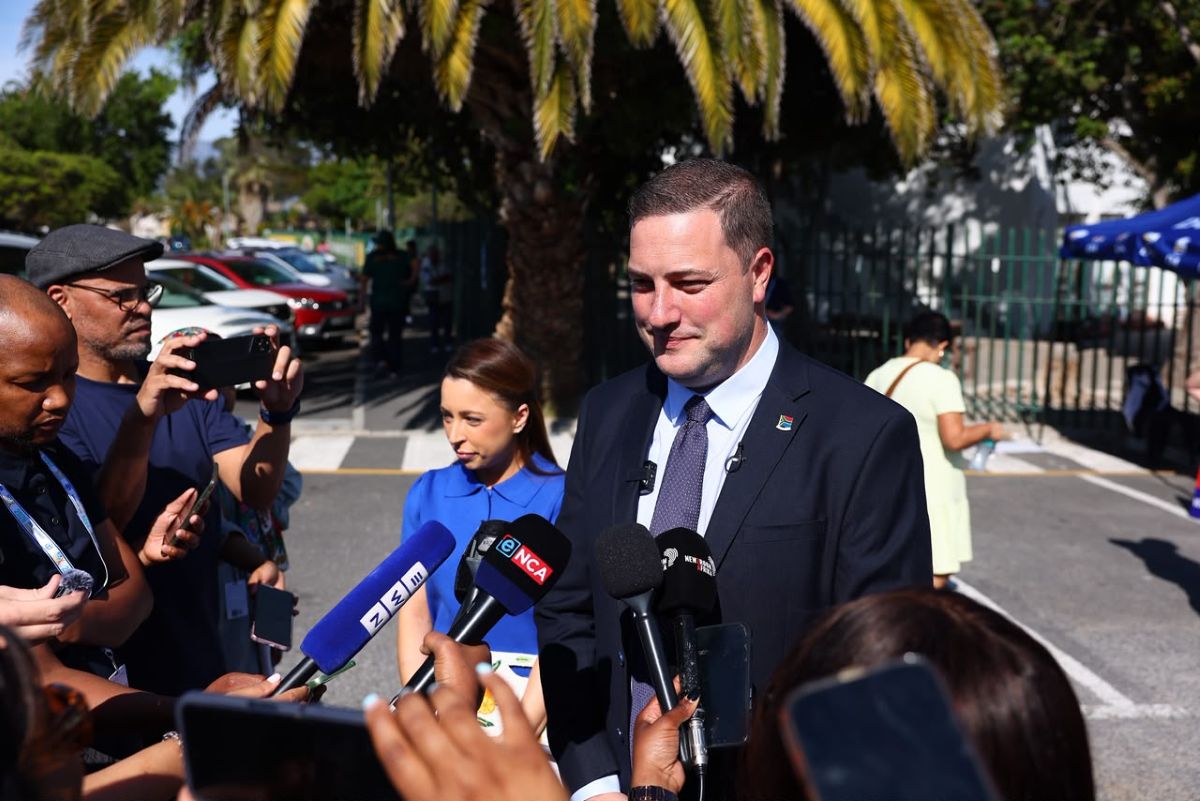
On Sunday, 22 November 2026, Democratic Alliance (DA) leader Geordin Hill-Lewis went public with a formal “stability framework” proposal designed to bring five-year governing certainty to 137 hung municipalities across the country.
The move—which follows a written submission delivered during negotiations on Friday, 20 November, signed by DA Federal Council Chairperson Ashor Sarupen and addressed to ANC Secretary-General Fikile Mbalula—represents one of the most ambitious coalition offers of the post-election cycle. According to Hill-Lewis, the DA had not yet received a response when it chose to publish the document in full.
“Now that details of a near-finalised deal are becoming public, South Africans deserve to see the alternative before the ANC’s National Executive Committee makes its choice. Voters are entitled to judge that choice for themselves with full information.” — Geordin Hill-Lewis, DA Leader
How the 137-Council Blueprint Works
At the heart of the DA’s proposal is a straightforward rule of thumb: the largest party among the cooperating bloc takes executive leadership of the council. Built on proportionality and a recognition that the African National Congress (ANC) remains the largest party in a majority of South African municipalities, the framework proposes a three-way breakdown involving the ANC, the DA, and the Inkatha Freedom Party (IFP), subject to agreement with the IFP.
| Party | Proposed Mayoralties | Share of 137 Councils |
| ANC | 93 | ~67.9% |
| DA | 24 | ~17.5% |
| IFP | 20 | ~14.6% |
| Total | 137 | 100% |
Beyond raw numbers, the framework carves out specific concessions and mechanisms intended to address longstanding coalition fault lines:
- SACP Concessions: In 19 municipalities where the ANC and the South African Communist Party (SACP) hold a majority, the DA says it is prepared to step aside so the ANC can form stable arrangements with its traditional alliance partners.
- Extending the KZN Model: The proposal explicitly brings in the IFP to anchor KwaZulu-Natal, extending the province’s cooperative governing model into local councils—including eThekwini and smaller municipalities—to prevent local turbulence.
- Confidence and Supply Over Forced Coalitions: Rather than requiring parties to merge into joint executive committees everywhere, the preferred model is confidence and supply. The leading party would run the mayoralty, mayoral or executive committee, and administration, while supporting partners back budgets and executive continuity, retain legislative oversight roles, and preserve their distinct political identities and policy positions.
- Containment of “Domino” Disputes: A graduated dispute-resolution mechanism—overseen by a two-party national political structure—is proposed to stop a local quarrel in one town from triggering retaliatory motions of no confidence across more than a hundred other councils.
Metros, Secondary Cities, and an 18-Month GNU Pledge
The framework spans all nine provinces, capturing major metropolitan battlegrounds—including Johannesburg, Tshwane, Ekurhuleni, eThekwini, Nelson Mandela Bay, Buffalo City, and Mangaung—alongside strategic secondary cities and provincial capitals such as Polokwane, Msunduzi, Rustenburg, Sol Plaatje, and JB Marks.
In metropolitan councils, the starting principle is that the largest party takes executive leadership. However, the DA signals room for manoeuvre, stating it is willing to negotiate deviations on specific metros if tied to mutually beneficial outcomes and agreed priority policies.
Crucially, the proposal links municipal truce-making directly to national stability. Under Section 6 of the framework, the DA offers an undertaking not to support any Section 102 motion of no confidence or Section 50 motion to dissolve the National Assembly for at least 18 months from the agreement’s commencement, subject to the Constitution, the rule of law, and final terms.
The stated aim is to reinforce the Government of National Unity (GNU) and give national and local administrations breathing room to govern.
High Stakes as the ANC NEC Weighs Its Options
Strategically, the DA’s public release is a calculated pressure play aimed squarely at the ANC’s National Executive Committee (NEC) ahead of pivotal coalition decisions. In his statement, Hill-Lewis warned against assembling fragile coalitions with parties that, in his words, “seek power only for access to state resources,” arguing that such arrangements would condemn residents—particularly in Gauteng’s troubled metros—to another five years of disruption.
At the same time, the document acknowledges that coalition talks are moving on multiple tracks under tight timelines. The DA notes that it has engaged other parties—and that some have set hard deadlines to conclude deals—making swift clarity from the ANC desirable if metropolitan and secondary-city administrations are to be settled cleanly.
For the ANC, the proposal poses a sharp political test. Ceding dozens of mayoralties where the DA or IFP is stronger in exchange for leading 93 councils—and locking in 18 months of parliamentary breathing space at national level—offers a structured path away from volatile minority or fringe-backed arrangements. Yet committing to a broad, nationwide pact with the DA carries internal ideological and factional weight for Luthuli House.
Whether the ANC NEC treats Hill-Lewis’s published blueprint as the foundation for a grand centrist settlement or a bargaining ploy in a wider coalition scramble will shape local governance across South Africa’s towns and cities for the next five years.