 By
Following the hard-fought local government elections of 4 November 2026, the Democratic Alliance (DA) has formally drawn a line in the sand regarding how it intends to approach coalition governments across South Africa’s municipalities.
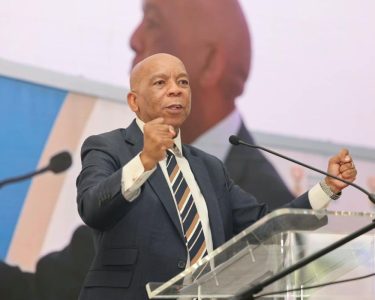
DA Leader Geordin Hill-Lewis published a comprehensive discussion document titled Principles and Programmes for Coalition Governments, setting out the strict governance standards, fiscal guardrails, and policy priorities required to rescue local authorities from dysfunction and decline.
The release marks a critical turning point for South Africa’s local political landscape, where fractured electoral outcomes frequently necessitate multi-party cooperation. By laying out its expectations transparently, the DA is signalling that future coalition partnerships will not be built on mere political expediency, but on verifiable commitments to clean administration, financial sustainability, and aggressive service delivery.
Core Governance: Zero Tolerance and the Rule of Law
At the heart of the DA’s coalition framework are six non-negotiable governance principles designed to restore public trust. First and foremost is a zero-tolerance approach to corruption, patronage, nepotism, and self-enrichment, reinforcing the rule of law and clean governance.
To achieve this, the document stresses the creation of a professional, merit-based public administration where appointments are strictly performance-driven and policy-making is rooted in evidence.
This goes hand in hand with a strict separation between party and state, ensuring public resources and municipal jobs are never hijacked for narrow political gain.
Furthermore, the DA’s framework demands high standards of accountability, transparency, and responsiveness, ensuring that public representatives remain accessible and take direct responsibility for municipal outcomes.
Emphasizing non-racialism, the document commits to redressing past injustices, uplifting impoverished communities, and expanding economic opportunity for all residents. Finally, the DA calls for all inter-party engagements to be conducted in good faith and with mutual respect, explicitly discouraging public grandstanding and political point-scoring.
Hard Fiscal Guardrails and Economic Prudence
Perhaps the most striking element of the DA’s blueprint is its rigid financial discipline. Past coalitions have often collapsed under the weight of bloated administrations and reckless spending. To prevent a recurrence, the framework establishes strict budgetary parameters for any municipality governed under a DA-backed coalition:
- Salary Caps: Municipalities must commit to spending no more than 30% of their total revenue on salaries and wages.
- Labour Discipline: There must be a strict implementation of the ‘no work, no pay’ rule during industrial action.
- Maintenance Thresholds: Administrations are expected to work toward spending at least 8% of the value of their “Property, Plant and Equipment” (PPE) on essential maintenance.
- Capital Investment: Parties must target investing 15% of total budgeted revenue into capital expenditure and infrastructure development.
- Revenue Ring-Fencing: Water and electricity revenue must be ring-fenced as far as possible to ensure funds are directly reinvested back into utility infrastructure.
- Public-Private Partnerships: Where municipalities lack the internal capital or resources, the framework explicitly encourages unlocking private investment through Public-Private Partnerships (PPPs).
Prioritizing Infrastructure, Safety, and Spatial Justice
Beyond fiscal stability, the framework outlines aggressive policy priorities for the 2026–2031 term, focusing on tangible improvements to residents’ daily lives.
Basic service delivery anchors the proposal. This includes securing reliable, clean running water through modern leak-detection technology and preventing wastewater contamination, alongside enhancing affordable electricity access, encouraging prepaid systems, and facilitating private electricity generation.
Urban management and spatial justice are given equal prominence. The DA proposes tackling apartheid spatial planning head-on by committing to the proactive release of municipal-owned land to accelerate affordable housing delivery, while expanding private-sector housing options and homeownership.
Other vital areas include enhancing local law enforcement with crime-fighting technologies, combatting substance abuse, improving waste management and recycling programmes, and reclaiming public spaces from neglect and lawlessness.
A Pledge to Transparency and Accountability
In releasing the document, Geordin Hill-Lewis emphasized that the choices political leaders make today will profoundly shape community futures for years to come. While the DA has made it clear that ongoing coalition negotiations will be kept out of the media and social media goldfish bowl, the party has committed to absolute transparency regarding the final product.
Once agreements are finalized, all mutual commitments will be codified into comprehensive, signed coalition agreements paired with locally negotiated Programmes of Governance tailored to specific municipal needs. These documents will be published for public scrutiny, allowing residents to hold all participating parties fully accountable for their promises.
As South Africa navigates the complex aftermath of the November 2026 local elections, the DA’s framework offers a pragmatic, albeit demanding, roadmap. Whether prospective coalition partners are willing to meet these rigorous standards of transparency, fiscal restraint, and professional governance remains to be seen.
What is certain, however, is that the bar for local government accountability has officially been raised.