 By
PRETORIA — With South Africa’s 2026 Local Government Elections fast approaching, the National Joint Operational and Intelligence Structure (NATJOINTS) has declared total operational readiness to secure the democratic process.
Backed by state-of-the-art coordination facilities and multi-departmental cooperation, the Security Cluster is implementing a robust, intelligence-driven posture designed to guarantee a peaceful, safe, and stable voting environment nationwide.
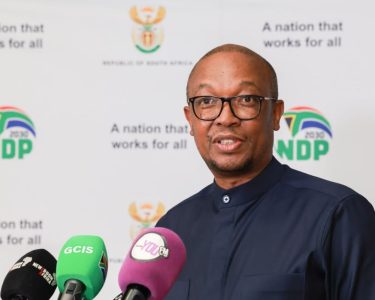
Speaking at a media briefing following the Independent Electoral Commission’s (IEC) updates, NATJOINTS emphasized that its comprehensive security framework is fully activated across all nine provinces.
A High-Tech, Intelligence-Led Security Network
At the heart of the government’s election security infrastructure is the NATJOINTS Coordinating Centre. Operating as an advanced early-warning nerve centre, the facility offers a real-time, birds-eye view of the security landscape across every metropolitan municipality, district, and policing precinct.
- Proactive Interventions: The centre enables authorities to monitor evolving developments and swiftly coordinate targeted deployments where resources are needed most.
- Multi-Departmental Synergy: Combining the capabilities of the South African Police Service (SAPS), the South African National Defence Force (SANDF), and the State Security Agency (SSA), the structure ensures seamless intergovernmental collaboration.
- Specialized Backing: Specialized tactical units and roving operational teams remain combat-ready, while the SANDF stands prepared to provide backup in designated hotspot areas if required.
To ensure uninterrupted civic participation, the Department of Home Affairs and other essential service providers have extended their operating hours to align with the IEC schedule—running from 07:00 to 21:00 on voting day.
Meanwhile, the secure storage and distribution of all electoral materials have been successfully completed under heavy security protection, with the SANDF’s air deployment capabilities on standby.
Strict Enforcement of Electoral Laws and Zero Tolerance for Disruptions
With the final day of campaigning concluding at midnight, NATJOINTS has issued a strict warning regarding rules governing the electoral period.
- No Campaigning on Voting Day: Political persuasion, marches, and demonstrations are strictly prohibited on voting day, with any contravention treated as a criminal offense.
- Public Order: Law enforcement has deployed sufficient personnel across all provinces, urging citizens to avoid unnecessary gatherings around voting stations.
- Decisive Action: While legitimate grievances regarding service delivery remain valid, the state will act decisively against anyone attempting to obstruct voting stations, intimidate voters, or threaten electoral officials.
Importantly, heightened election security will not compromise routine policing. Local police stations will remain fully operational, ensuring that ordinary public safety and emergency response functions continue without disruption.
Tackling Election-Related Crime and Political Violence
Addressing the darker side of the electoral lead-up, NATJOINTS revealed that 139 election-related criminal dockets have been registered nationally since the start of the 2026 local government election processes.
- Arrests and Prosecutions: Out of these cases, 48 suspects have been arrested, 25 cases have been formally enrolled in court, and 69 remain under active investigation.
- Electoral Act Violations: Electoral Act infractions account for the highest volume of reported offenses, yielding 72 cases and 22 arrests. Other recorded crimes include assaults, malicious damage to property, theft, intimidation, and 10 reported murders.
Most alarmingly, authorities have recorded 20 total murders involving political representatives, party members, and supporters across multiple provinces, including Gauteng (7), KwaZulu-Natal (6), the Western Cape (3), the Eastern Cape (2), the Free State (1), and the North West (1). In response, the SAPS has deployed specialized investigative capacity, including the elite Political Killings Task Team, to bring perpetrators to justice.
Regional security measures are also addressing specific localized threats. In KwaZulu-Natal, police are closely monitoring protest dynamics under strict court guidelines that protect peaceful assembly while banning violent disruptions or demonstrations within 100 metres of voting stations.
In the Western Cape, targeted interventions remain underway to curb taxi-related violence and maintain public order.
Safeguarding the Democratic Process
Concluding the briefing, NATJOINTS appealed to political leadership, civil society, and the media to promote responsible citizenship and verify information rigorously to combat the spread of digital misinformation.
As daily security updates continue throughout the electoral cycle, the message from the Security Cluster remains unequivocal: South Africa’s democratic framework is fully protected, and every eligible citizen will be empowered to cast their vote free from fear, intimidation, or unlawful interference.