 By
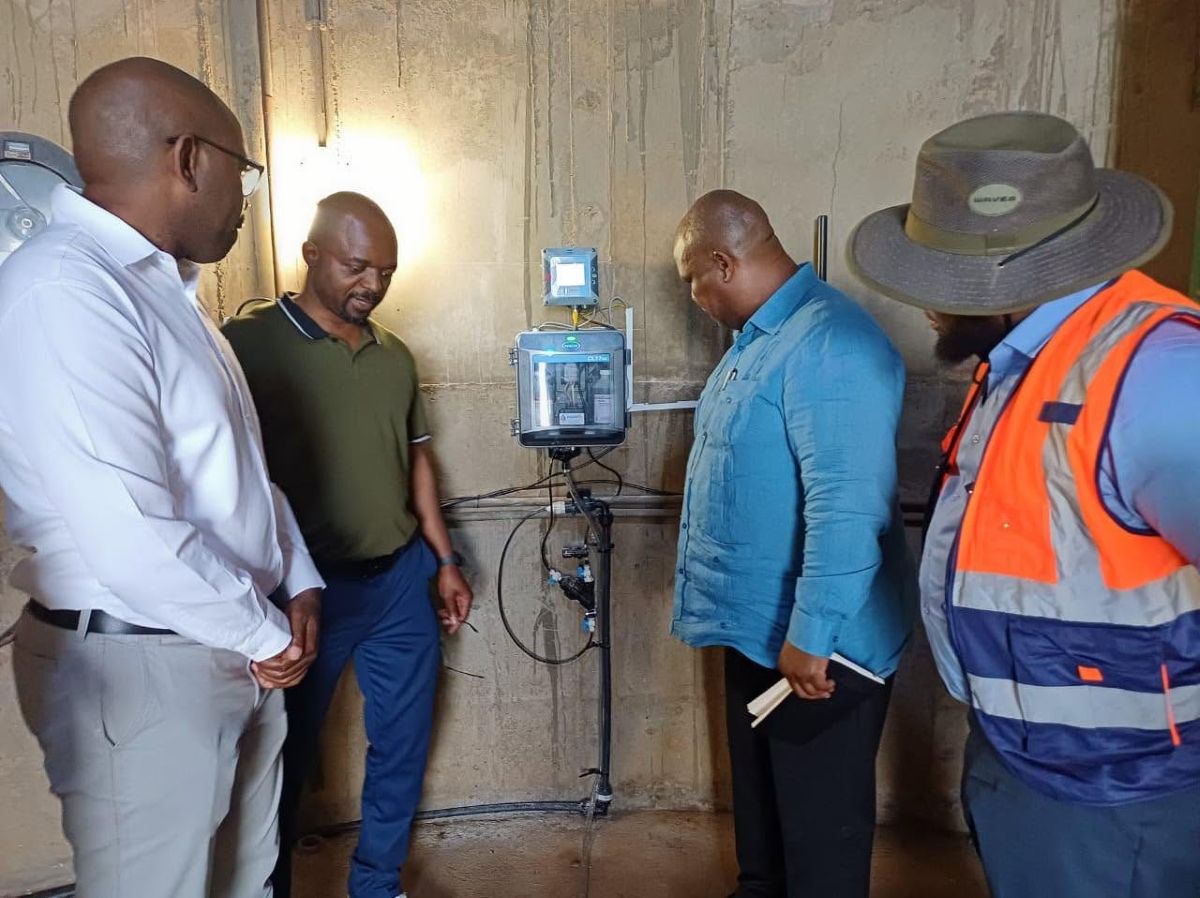
JOHANNESBURG — In a decisive move to tackle persistent water supply failures and infrastructure decay, the Gauteng Department of Cooperative Governance and Traditional Affairs (CoGTA) has officially launched an advanced, telemetry-driven water monitoring system.
Rolled out on Friday, 30 October 2026, the high-tech initiative marks a major shift from reactive political blame games to hard, science-backed governance.
The pilot project, implemented in partnership with the Council for Scientific and Industrial Research (CSIR), is initially targeting critical stress points in Mogale City and the City of Johannesburg. Specifically, the technology covers the Kagiso and Kenmare water systems in Mogale City alongside Johannesburg’s Crown Gardens system.
By deploying smart telemetry, the provincial government aims to gain direct visibility into municipal water networks, tracking reservoir levels, flow rates, consumption patterns, and vital potable water quality indicators such as chlorine levels in real time.
Closing the Blind Spots in Local Governance
For years, provincial oversight over municipal water services has been severely hampered by an over-reliance on self-reporting by local authorities. Gauteng CoGTA MEC Jacob Mamabolo underscored the limitations of this legacy approach during the launch, noting that the province was previously left blind to actual ground realities.
“As the province, we are doing oversight, but we do not see the system,” MEC Mamabolo stated. “We depend on municipalities telling us about water levels and flows. With this pilot, we are able to see what is happening in the water distribution network.”
By removing the information gap, the telemetry system aims to eliminate protracted disputes between spheres of government over water outages. “We cannot do oversight without data,” Mamabolo emphasized. “Science should talk, the facts should talk, and we should not be blaming each other, because we will be able to see from the centre what is happening in the system.”
Combating Leaks and Ensuring Water Quality
Gauteng’s infrastructure has long suffered from staggering non-revenue water losses, aging pipelines, and recurring maintenance backlogs that frequently leave households and businesses with dry taps. The new telemetry solution provides immediate diagnostic data to pinpoint exactly where water is being lost within the network. This evidence-based tracking will guide targeted repairs, routine maintenance schedules, and the strategic prioritisation of infrastructure replacements.
Beyond quantity and leak detection, the system places a heavy emphasis on public health and safety. It continuously monitors chlorine parameters and triggers automated alerts when quality thresholds fluctuate. This feature allows technical teams to respond swiftly to potential contamination or water safety risks before they escalate into public health crises.
A Step Toward Smart, Resilient Municipalities
This high-tech intervention is not an isolated exercise; it forms a core pillar of the Gauteng Local Government Turnaround Strategy. Furthermore, it ties directly into the National CoGTA Smart Cities Framework, which champions innovation and digital transformation to optimize resource allocation, enhance public service delivery, and elevate the standard of living for residents.
The provincial department has indicated that the pilot will undergo a rigorous one-month performance assessment. The data and insights gathered during this initial trial period will shape proposals for a broader, province-wide rollout.
Future expansion will be contingent upon the final assessment outcomes and available fiscal resources, with metropolitan municipalities and high-consumption zones slated as top priorities.
As Gauteng grapples with mounting environmental and infrastructural pressures, the deployment of real-time telemetry offers a glimmer of hope that data-driven accountability may finally stem the tide of the province’s water crisis.