 By
JOHANNESBURG — Provincial authorities have drawn a hard line against housing fraud, issuing a stern and uncompromising warning to RDP beneficiaries who treat state-subsidized homes as commercial commodities.
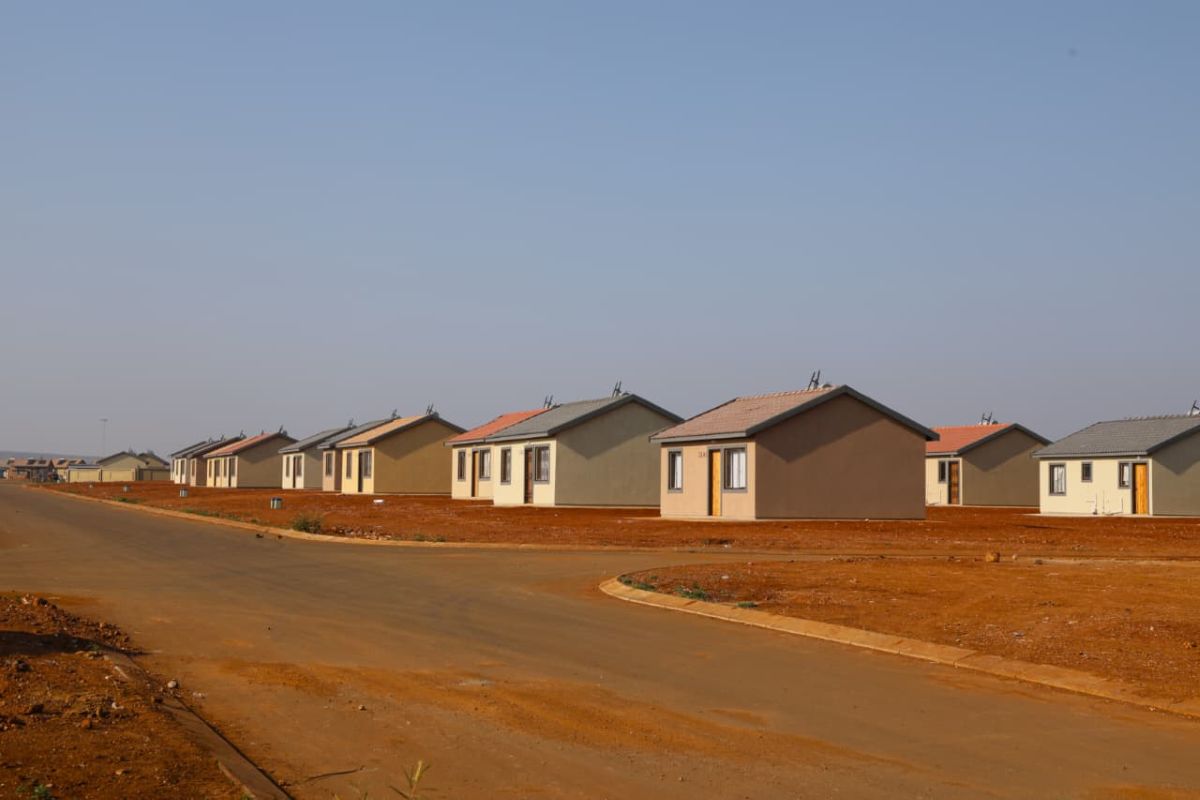
Speaking during the final handover of 204 residential units at the Jabulani Parcel K project in Soweto, Gauteng MEC for Human Settlements declared that the department has reached its limit with beneficiaries who illegally sell or rent out properties intended to restore dignity to the vulnerable.
Joined by Gauteng Premier Panyaza Lesufi and City of Johannesburg MMC for Human Settlements Mlungisi Mabaso, the MEC pulled no punches as she addressed the newly minted homeowners. Provincial leadership has made it clear that unlawful tenants will be swiftly evicted and homes reallocated to deserving applicants on the official housing waiting list.
Zero Tolerance for Illegal Sales and Rentals
The latest allocation marks a major milestone for the Jabulani Parcel K development—a mixed typology project featuring 705 RDP walk-up units, alongside planned social housing and First Home Finance options. However, the long-awaited project, which suffered a four-year bottleneck due to delays in constructing an electrical sub-station, has been marred by recurring compliance breaches.
Addressing the crowd, the MEC highlighted a frustrating double standard that plagues public housing administration. While the government frequently absorbs public criticism regarding housing allocations and illegal sales, investigations repeatedly show that it is the designated beneficiaries themselves subverting the system.
“We are also tired; we are also fed-up,” the MEC asserted. “When we start the process of registering title deeds, if the Department does not find the beneficiary on the system in the house, we will remove the tenants and reallocate the house.”
Under the government’s enforcement framework, title deed registration will begin immediately as residents settle in. Officials emphasized that any house found occupied by unauthorized tenants or listed on informal property markets will be reclaimed by the state and redirected to qualifying individuals trapped on the backlog registry.
Overcoming Infrastructure Hurdles
The conclusion of the Parcel K rollout brings structural relief to a community that has endured prolonged setbacks. The development was severely stalled for four years awaiting the completion of critical electrical infrastructure.
Expressing gratitude to Eskom for unlocking the area’s power constraints, the MEC noted that the site has now reached full electrical capacity. Once fully realized, the comprehensive 1,410-unit mixed-use precinct will integrate 705 RDP walk-ups, 564 social housing units, and 141 First Home Finance houses, transforming the prime Soweto location into a vibrant, multi-income community.
A Long-Awaited Triumph for Residents
Despite the stern warnings against abuse of the system, the atmosphere at Jabulani Parcel K was overwhelmingly emotional for lawful recipients who saw decades of patience finally rewarded.
Among them was Thoko Dlamini, who celebrated receiving her home just ahead of her 70th birthday on December 20. Having applied for housing in 1996, Dlamini’s thirty-year wait culminated in a moment of profound relief.
“I applied in 1996 and I have been patient,” Dlamini shared, reflecting on her journey. “I thank the government because I no longer have means to buy a house. I am happy”. Offering words of encouragement to those still waiting in the vast provincial backlog, she urged fellow applicants to maintain hope, assuring them that perseverance pays off.
As the Gauteng government rolls out title deed registration across Jabulani Parcel K, the message to the community is unmistakable: public housing is an instrument of social justice and permanent security of tenure, not a stepping stone for illicit profit.