 By
In a stunning political comeback that has sent shockwaves across Latin America and international diplomatic circles, Luiz Inácio Lula da Silva has secured a historic fourth term as Brazil’s president.
Overcoming a narrow first-round deficit and a fierce challenge from far-right opponent Flávio Bolsonaro, the 80-year-old leftist incumbent clinched victory with 51.79% of the vote, defeating his 45-year-old rival who finished with 48.21%.
The high-stakes runoff marks an unprecedented moment in modern Brazilian democratic history. No runner-up from a first round had ever successfully overturned a deficit to win the second vote since democracy returned in the 1980s.
Yet, fuelled by a mobilized electorate that successfully narrowed the first-round abstention gap, Lula delivered a decisive turnabout on Sunday, prompting ecstatic celebrations from São Paulo’s Paulista Avenue to Rio de Janeiro’s Copacabana beach.
A Defeat for Denialism and a Boost for Global Progressivism
Addressing a packed conference hall of jubilant supporters in São Paulo, a triumphant Lula framed the outcome as a monumental rejection of extremist politics.
“We are going to change the way that this country is governed… This election was a defeat for denialism,” Lula told the cheering crowd, attributing the hard-fought triumph to the resilience of Brazilian democracy.
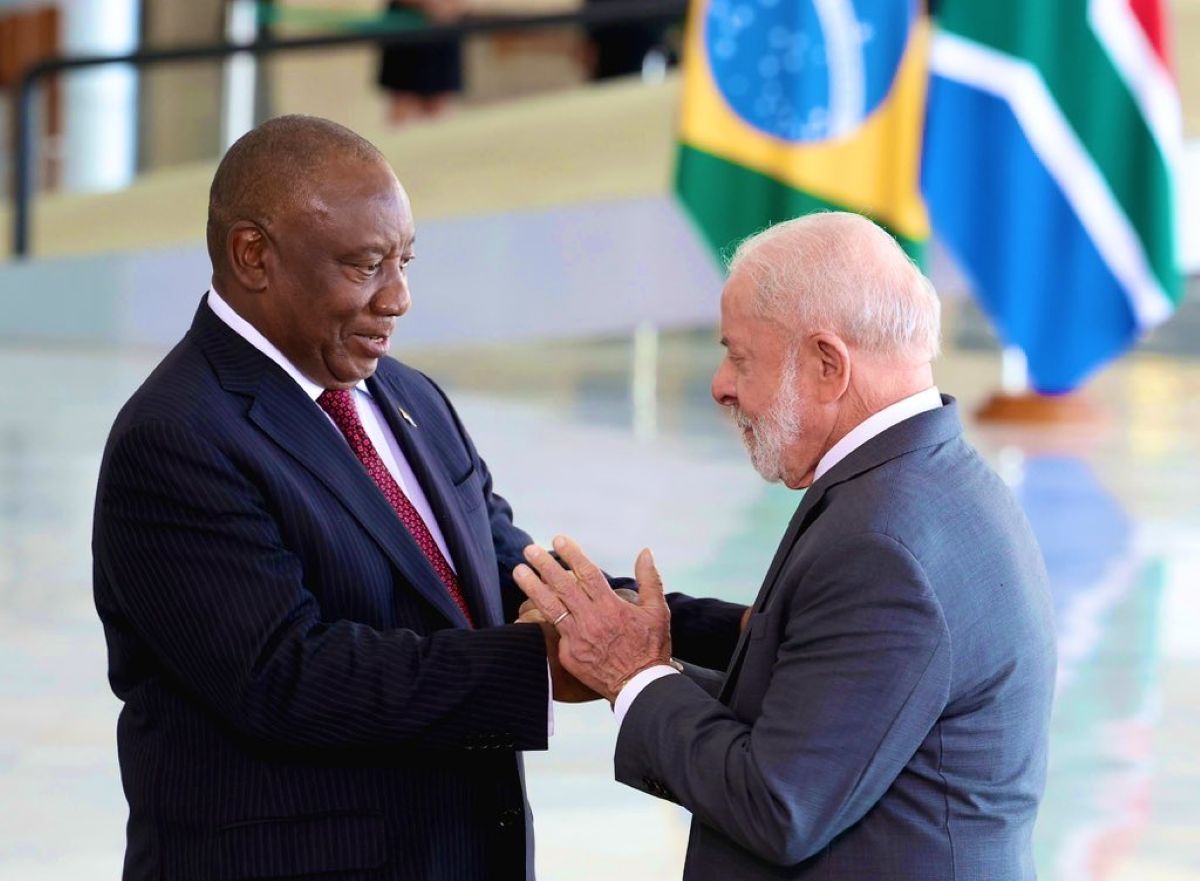
The victory has resonated powerfully far beyond Brazil’s borders. South African President Cyril Ramaphosa swiftly extended warm congratulations on behalf of the South African government and people, hailing his “dear brother and friend” for securing a historic fourth term.
Emphasizing the geopolitical weight of the result, President Ramaphosa stated, “This victory will echo beyond the shores of Brazil. It is a victory for the global south and progressive forces throughout the world”. He further reaffirmed Pretoria’s commitment to deepening bilateral cooperation through multilateral frameworks like BRICS, IBSA, the G77+China, and the G20 to foster a fairer global order governed by international law.
International leaders, including Mexican President Claudia Sheinbaum and Paraguayan President Santiago Peña, also joined the chorus of praise, celebrating what they hailed as a triumph for regional democracy.
Echoes of 2022 and Post-Election Contestation
Despite the definitive tally—with 100% of the votes counted and a margin of 4.4 million votes separating the candidates—the shadow of political polarization loomed heavy over the transition. Flávio Bolsonaro swiftly refused to concede defeat, echoing the playbook of his father, former president Jair Bolsonaro, who infructuously contested his own 2022 loss to Lula.
The younger Bolsonaro announced that his legal team would petition to have the election annulled, pointing to a supreme court justice’s decision to extend voting hours. Independent observers and campaign officials, however, noted the irony of the complaint, given that the Bolsonaro campaign had similarly requested extensions.
The fallout carries severe domestic and international implications. Jair Bolsonaro is currently serving a 27-year prison sentence for a botched power grab following his 2022 defeat—an attempted coup from which his son had hoped to secure a pardon and a government role.
Furthermore, the result delivers a stinging diplomatic setback to US President Donald Trump and right-wing populist movements across Latin America, who viewed the Bolsonaro campaign as a critical foothold for conservative resurgence in the region.
A Historic Final Chapter
For Lula, who turns 81 just days after his victory, the triumph serves as a remarkable capping stone to an extraordinary political odyssey. Rising from rural poverty to become a prominent trade union leader in the industrial outskirts of São Paulo during the late 1970s, Lula broke barriers in 2002 by becoming Brazil’s first working-class president.
Having governed for two consecutive terms and later returning to power in 2022, this latest mandate cements his enduring legacy as a titan of Brazilian politics. As supporters wave flags and celebrate on the streets, the message from São Paulo is clear: Brazil’s progressive movement has weathered the storm, securing a pivotal mandate for the environment, public education, health systems, and democratic governance.