 By
In what marks a decisive pivot for South Africa’s battered public finances, Minister of Finance Enoch Godongwana delivered a confident Medium-Term Budget Policy Statement (MTBPS) on Wednesday, announcing that years of strict fiscal consolidation and tough structural decisions are finally bearing fruit.
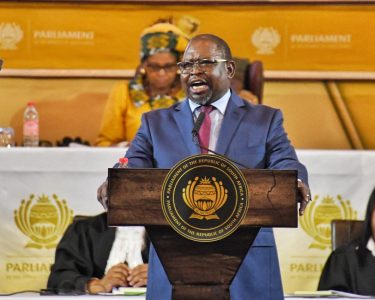
Presenting the 2026 MTBPS to Parliament, Godongwana declared that South Africa has successfully halted its decades-long trajectory of escalating debt, projecting national debt as a percentage of gross domestic product (GDP) to stabilize and begin its downward trajectory from a peak of 78.4 per cent in the 2025/26 financial year.
Against a backdrop of geopolitical turmoil, persistent global inflation, and domestic service delivery bottlenecks, Godongwana’s message was clear: South Africa’s fiscal buffers have been fortified, creating a stable platform to transition from defensive consolidation to growth-enhancing investment.
A Tighter Belt Yields Upward Tax Windfalls
The cornerstone of the 2026 mini-budget is a marked improvement in near-term revenue performance. Gross tax revenue for the 2026/27 financial year was revised upward by R17.1 billion compared to February’s estimates, driven primarily by buoyant collections in corporate income tax, dividend taxes, and value-added tax (VAT), fuelled in part by favourable global commodity prices.
This revenue momentum has allowed National Treasury to narrow the projected consolidated budget deficit for 2026/27 to 3.9 per cent of GDP—outperforming the 4.0 per cent target set earlier this year—with a long-term trajectory aiming for 2.5 per cent by 2030.
Concurrently, government’s primary budget surplus is expected to expand from 1.7 per cent of GDP this year to nearly 3 per cent by 2030, drastically dampening debt-service costs that have long squeezed frontline expenditure.
“The difficult choices of the past few years were made for a purpose: to restore stability today so that we can build a faster-growing, more inclusive and more resilient economy tomorrow,” Godongwana told lawmakers. “Debt as a percentage of GDP is now falling, creating a stronger foundation for investment, growth, and job creation.”
The Minister highlighted positive credit rating actions from all three major global rating agencies earlier in the year as external validation that South Africa’s macroeconomic credibility is being restored.
Global Headwinds Drag Domestic Growth Forecasts
Despite fiscal gains, the domestic real economy continues to feel the sting of international shocks. The global fallout following military conflicts in the Middle East and the temporary disruption of the Strait of Hormuz—coupled with higher oil prices and tighter global financial conditions—has dampened South Africa’s near-term growth path.
National Treasury trimmed its real GDP growth forecast for 2026 to 1.2 per cent, down from the 1.6 per cent projected in February. Growth is expected to pick up gradually to 1.6 per cent in 2027 and 2.0 per cent by 2029. However, Godongwana stressed that if South Africa accelerates its structural reform agenda—particularly across energy, logistics, and water—annual economic expansion could cross the 3 per cent threshold.
Cost-of-Living Relief: Fuel Levy Cut Announced
In an immediate intervention aimed at cushioning households and businesses from surging energy prices, Godongwana unveiled a substantial, targeted fuel tax intervention.
From November 4 to December 1, 2026, the general fuel levy will be slashed by R3.00 per litre for diesel and R1.50 per litre for petrol. From December 2, 2026, to January 5, 2027, the relief will taper to a discount of R1.50 per litre for diesel and R1.00 per litre for petrol.
The R10 billion fiscal cost of the package will be fully offset by returning funds previously transferred to the Central Energy Fund back into the National Revenue Fund’s Contingency Reserve, ensuring that consumer relief does not compromise overall budget balance.
Structural Reforms and the R217 Billion Infrastructure Pipeline
To lift long-term growth, the Treasury is reallocating capital away from public consumption toward high-yield economic infrastructure. Payments for capital assets are slated to be the fastest-growing expenditure line over the Medium-Term Expenditure Framework (MTEF), expanding at 5.3 per cent per annum.
Key to this strategy is the operationalization of the Infrastructure Finance and Implementation Support Agency (IFISA), which launched on April 1, 2026. Consolidating project advisory, preparation, and financial structuring, IFISA is currently supporting a pipeline of projects across government tiers valued at over R217 billion. Furthermore, the Budget Facility for Infrastructure (BFI) has approved more than R100 billion in fiscal support, complemented by R14 billion raised through specialized infrastructure bonds since late 2025.
Complementing infrastructure build-outs are ongoing institutional overhauls:
- Water Sector: Implementation of the National Water Action Plan to fix failing municipal water governance, reduce non-revenue water losses, and reform financing models.
- Energy Sector: Unbundling Eskom and establishing an independent transmission system operator to build an open, competitive electricity market.
- Public-Private Partnerships (PPPs): Streamlining municipal PPP regulations—31 out of 68 active pipeline projects are local government ventures—to crowd in private funding for municipal service delivery.
Institutional Guardrails: Modernizing the PFMA and MFMA
To prevent a return to the structural vulnerabilities of the State Capture era, Godongwana published draft legislation for an explicit fiscal anchor to be embedded into the Public Finance Management Act (PFMA) in 2027.
Rather than enforcing an inflexible rigid cap, the anchor requires incoming administrations to formally set and defend their medium-term fiscal targets, with the Financial and Fiscal Commission (FFC) providing independent monitoring.
In parallel, the government is executing the first comprehensive overhauls of the Public Finance Management Act (PFMA) and the Municipal Finance Management Act (MFMA) in over two decades.
The reforms will mandate genuinely funded municipal budgets, expand enforcement against persistent non-compliance, protect honest accounting officers, and streamline interventions in distressed municipalities.
Treasury demonstrated its willingness to act against municipal delinquency earlier this year by withholding equitable share transfers from 69 non-paying municipalities, which successfully forced 37 councils into approved creditor debt repayment plans totalling R4.2 billion.
Social Wage Allocation and Fighting Crime
Consolidated government expenditure is set to rise at an average annual rate of 3.6 per cent, reaching R3 trillion by 2029/30. Over 60 per cent of non-interest spending remains dedicated to the “social wage”—funding healthcare, basic education, social grants for 18.1 million beneficiaries, and free basic services for 11 million low-income households.
Key targeted social and security allocations in the adjustments budget include:
- Gender-Based Violence & Femicide (GBVF): R3.8 billion to recruit over 3,500 social workers; expansion of sexual offenses courts from 55 to 101; expansion of Thuthuzela Care Centres to 80; and R186 million for forensic and investigative capacity.
- Fighting Crime & Corruption: R810 million to recapitalize the South African Police Service (SAPS) vehicle fleet; R823 million for South African National Defence Force (SANDF) deployments against gang violence and illegal mining; and R2.2 billion over the medium term to bolster judicial independence.
- Early Childhood & Agriculture: R1.6 billion toward pre-birth and early 1,000-day maternal/child nutrition to combat stunting, and R1.5 billion for agricultural extension officers.
- Public Service Rejuvenation: Allocation of funding for voluntary early retirement packages, designed to lower the overall public wage bill while modernizing the state’s skill set, yielding projected annual savings of R4.4 billion.
Financial Sector Policy: Crypto and Online Gambling
Turning to financial sector regulation, Godongwana revealed a pivot in the regulatory posture toward cross-border crypto assets. Following thousands of public comments on draft capital flow regulations, Treasury and the Reserve Bank are shifting away from rigid prior-approval systems toward risk-based assessments focusing on transaction legitimacy and tax compliance.
Additionally, formal announcements regarding a proposed National Online Gambling Tax will be finalized in the main Budget in February 2027 following ongoing interprovincial consultations, while draft legislation to centralize the identification and tracing of Unclaimed Financial Assets is set for tabling in 2027.
The Road Ahead
With local government elections on the horizon, Godongwana ended his address on a note of pragmatic accountability, emphasizing that increased intergovernmental transfers to municipalities—now reaching a record 10 per cent share of available non-interest spending—must yield measurable improvements in daily community life.
“This policy statement confirms that we have stabilized our public finances,” Godongwana concluded. “Over the next three years, our task is to turn this stability into faster growth and more jobs.”